Choosing the right Childrens GPS Phone Watch is not simply a matter of comparing bright screens, prices, and colorful straps. Global buyers need a device that works reliably across different networks, languages, climates, and family routines. A watch that performs well in a city may struggle inside a concrete school building or during a long journey. That practical gap matters.
Sarah Kimmel, a family-technology educator, says, “Technology should support parenting, not replace it.” This principle guides our evaluation. A dependable Childrens GPS Phone Watch should offer accurate location updates, trusted-contact calling, geofencing, and a clear emergency function. Battery life also deserves close attention. A small battery may appear convenient, yet frequent charging can make the watch useless when a child needs it most. Simple controls help children respond without confusion.
Privacy cannot be treated as a minor feature. Buyers should examine data practices, account protection, location-sharing controls, and customer support before purchasing. Network compatibility is equally important, especially for families crossing borders. Some models advertise global use but support only selected carriers or regions. Read the specifications carefully.
No model is perfect. GPS can drift near tall buildings, and waterproof claims may have limits. Our comparisons therefore focus on real-world reliability, not impressive packaging. Parents should still teach children when to call, whom to contact, and how to protect personal information. The best Childrens GPS Phone Watch is not necessarily the most expensive one. It is the device that remains usable, secure, and dependable in ordinary family life.
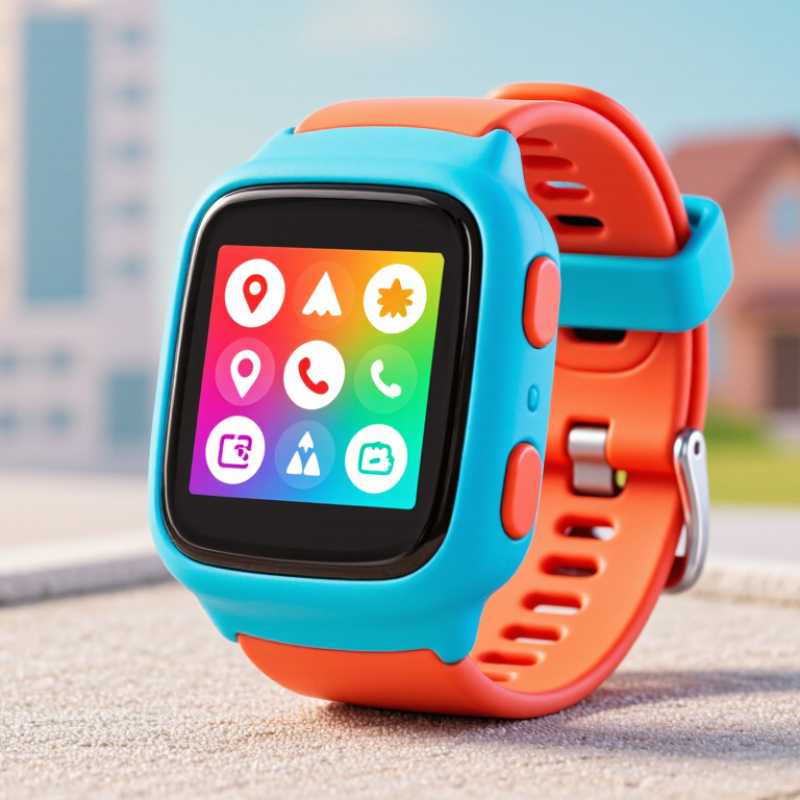
A GPS phone watch for children is a wearable device that combines location tracking with basic communication. It usually connects to a mobile network through a compatible SIM or eSIM. Parents can view the child’s approximate position through an approved app, while the child may make calls to selected contacts. Some models also offer voice messages, safe-zone alerts, an SOS button, step counting, and school-time settings.
The watch receives signals from GPS satellites, but accuracy changes with buildings, weather, and surrounding structures. Indoor location can disappoint. That matters when a child is inside a large school or shopping centre. In practical use, battery life, strap comfort, screen brightness, and charging habits often matter more than a long feature list. A device that lasts only one day may become useless after a forgotten charge.
Global buyers should check network frequency support, roaming conditions, language options, and regional service availability before purchasing. Privacy settings deserve equal attention. Location sharing should be limited to trusted guardians, with clear controls for stored voice messages and account access. Water resistance is helpful, but it does not always protect against swimming or hot water. The best choice depends on the child’s age, routine, and communication needs, not only the advertised tracking range. Some parents may also need to reconsider whether constant tracking creates reassurance or unnecessary dependence.
A children's GPS phone watch combines location tracking, voice communication, emergency alerts, and basic activity features in a wearable device. Battery performance depends on network coverage, tracking frequency, screen use, and calling time.
Typical category benchmarks: continuous GPS tracking usually uses more power than calling, while standby mode provides the longest runtime. Actual battery life varies by device, network, GPS signal, and settings.
A children’s GPS phone watch combines satellite positioning, mobile communication, and simple safety controls in one wearable device. GPS satellites calculate the watch’s approximate location through signal timing. The watch then sends that location through a mobile network to an approved caregiver’s phone. GPS finds the position. Cellular service shares it.
In daily use, the watch may support voice calls, short messages, location updates, and an emergency contact button. Many models also use Wi-Fi or nearby Bluetooth signals when satellite reception is weak. This can improve indoor accuracy, but it is not perfect. Thick walls, underground areas, tall buildings, and poor network coverage may delay updates. A responsible setup should test the watch near home, school, and common travel routes.
Geofencing Geofencing can create a digital boundary around a selected area. The caregiver may receive an alert when the watch enters or leaves that zone. Battery capacity, update frequency, and network availability affect this feature. More frequent tracking usually consumes more power. That trade-off is easy to overlook. Privacy settings also matter: use strong passwords, limit approved contacts, and review stored location data regularly. Location information should be shared only with trusted adults. A watch can support family communication, but it cannot replace supervision or honest conversations about safe travel. Its signal may fail at an inconvenient moment. That possibility deserves planning, not panic.
Choosing a children’s GPS phone watch requires more than checking its appearance. Global buyers should compare network compatibility, location accuracy, battery life, and service coverage. A watch may work well in one country but fail after crossing a border. Confirm supported cellular bands and local service requirements before purchase.
Location tracking should combine GPS, Wi-Fi, and nearby mobile signals. This helps when a child enters a school building or crowded station. Test the watch outdoors, then compare its location with a known map point. Small delays are normal, but repeated errors deserve attention. A clear SOS button, two-way calling, and trusted-contact controls also matter. The setup should be simple enough for a caregiver to manage without technical training.
Look for geofencing, low-battery alerts, water resistance, and a comfortable strap. The battery should last through a full school day, including location updates. Privacy settings need careful review, especially data storage, account access, and deletion options. Local privacy and communication rules can differ, so buyers should check official guidance before use. No device is perfect. Indoor tracking can be unreliable, and voice quality may drop in weak coverage areas. I would test customer support before ordering, not after a problem appears. Clear manuals and responsive assistance often reveal more than polished specifications.
A children’s GPS phone watch should be judged by safety, privacy, and international compatibility, not colorful features. GPS can help locate a child, but accuracy changes near tall buildings, indoors, or under weak satellite signals. A reliable watch should offer clear location intervals, a visible emergency button, and a simple contact list. Parents should test it outdoors and inside their home. Small details matter.
International use is less simple than the product page suggests. Cellular bands, roaming agreements, SIM restrictions, and network shutdowns can affect calls and tracking. GSMA Intelligence reports that cellular IoT connections are expected to reach 7.4 billion by 2029, showing rapid network growth, but coverage remains uneven between regions. Buyers should verify supported LTE bands and local network access before travel. A device that works in one country may become a quiet clock elsewhere.
Privacy needs equal attention. The watch may collect location history, voice recordings, contacts, and movement patterns. Verizon’s 2024 Data Breach Investigations Report found that the human element appeared in 68% of breaches, reminding families that weak passwords and careless sharing still matter. Choose encrypted communication, limited data retention, strong account controls, and independent security updates. Avoid public location links. That sounds obvious. It is not always practiced. Parents should also explain tracking to the child, because safety without trust can create a different problem.
Choosing a children’s GPS phone watch requires more than checking its location icon. Confirm cellular bands, eSIM support, and roaming coverage in the child’s country. GSMA’s The Mobile Economy 2024 report recorded 4.7 billion mobile internet users worldwide in 2023. Network compatibility matters.
GPS performance can weaken indoors, near tall buildings, or during bad weather. Look for multi-source positioning, combining GPS, Wi-Fi, and cellular signals. Battery life should cover a full school day, with clear low-battery alerts. A practical test is simple: place the watch in a backpack, then check location updates from several rooms. Results may disappoint.
Tips: Check the privacy dashboard before purchase. Choose strong passwords, limited contacts, encrypted communication, and adjustable location sharing. A 2024 Berg Insight IoT report describes continued growth in cellular-connected devices, but more connectivity also creates more data exposure. Avoid watches with unclear data retention policies. Review microphone and camera permissions carefully. Also inspect the strap, charging pins, water resistance, and emergency-contact settings. Small details matter.
Children may find the watch uncomfortable or distracting. Parents may overtrust an imperfect map. That is worth remembering. A reliable device supports supervision; it cannot replace conversation, agreed routines, or adult judgment. Test the watch locally before international travel, because coverage and roaming behavior can change across borders.
GPS satellites estimate the watch’s position through signal timing. Cellular networks send that location to an approved caregiver’s phone. GPS finds the position. Cellular service shares it.
It may use Wi-Fi or nearby Bluetooth signals indoors. Thick walls, underground spaces, and tall buildings can reduce accuracy. Indoor results are not always reliable.
Look for location updates, two-way calls, short messages, and a clear emergency button. Low-battery alerts and water resistance are also useful. Comfort matters during long school days.
Confirm supported cellular bands before purchase. Check local service requirements and coverage areas. A watch may work at home but fail across a border.
Geofencing creates a digital boundary around a chosen place. Caregivers may receive alerts when the watch enters or leaves that area. Frequent alerts can drain the battery faster.
Small delays are normal. Compare the watch’s location with a known outdoor map point. Repeated errors deserve attention, though I might overlook them during a busy day.
The battery should cover a full school day with location updates. More frequent tracking uses more power. A low-battery alert can prevent unpleasant surprises.
Use strong passwords and limit approved contacts. Review stored location data regularly. Share location details only with trusted adults. Privacy settings deserve careful attention.
No device can replace supervision or honest safety conversations. Signals may fail near schools, stations, or concrete buildings. Plan for that possibility, not panic.
A Childrens GPS Phone Watch is a wearable communication and safety device designed to help parents stay connected with their children. It typically combines GPS location tracking, voice calling, messaging, and emergency alerts in a compact watch. By using satellite positioning and mobile networks, the device can share a child’s approximate location with authorized family members, while simple controls make it suitable for younger users. Some models may also include geofencing, activity monitoring, school-time settings, and location history.
For global buyers, important comparison points include positioning accuracy, battery life, network coverage, durability, ease of use, subscription requirements, and compatibility with local mobile services. Safety and privacy should be considered carefully, including secure data handling, restricted contacts, parental controls, and clear consent practices. Buyers should also confirm regional availability and service support before purchasing. The right Childrens GPS Phone Watch should balance reliable communication, practical safety features, comfortable design, and dependable international compatibility without offering unnecessary functions.