Choosing the best Kids eSIM Smartwatch for global buyers requires more than comparing screen size and colorful straps. Families need a dependable connection across borders, clear parental controls, and practical safety features. An eSIM can simplify mobile service because parents may activate or change a plan remotely. However, coverage still depends on local carrier agreements, supported network bands, and regional restrictions. Travel does not guarantee service.
Anne Bouverot, former GSMA Director General and a respected mobile technology authority, said, “The embedded SIM will bring new opportunities for mobile operators and their customers.” Her observation helps explain why eSIM technology matters in children’s wearables. It can reduce the need for physical SIM handling, especially when a child visits relatives abroad or joins an overseas school trip. Still, technology is not magic.
A strong Kids eSIM Smartwatch should offer reliable location updates, two-way calling, an emergency contact function, and a battery that lasts through a full school day. Water resistance matters near playground fountains. So does a comfortable strap that will not irritate smaller wrists. Parents should examine data privacy settings, app permissions, subscription terms, and the manufacturer’s support reputation. Some watches promise worldwide coverage but depend on one limited network. That claim deserves careful questioning.
Real-world testing remains important. Indoor positioning may be less accurate near tall buildings. Battery life may drop quickly when location tracking runs continuously. No device replaces adult supervision. This guide compares the leading options for global buyers, while acknowledging an uncomfortable truth: the “best” watch depends on destination, carrier compatibility, age, and family priorities.
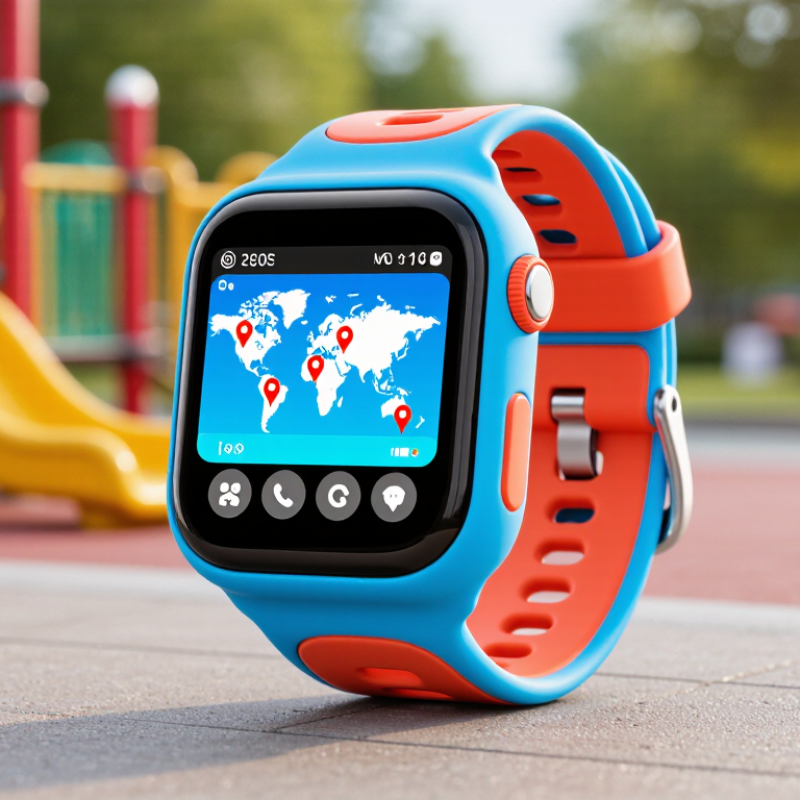
GSMA’s forecast of 2.4 billion eSIM smartphone connections by 2025 reflects a major shift in mobile connectivity. For global buyers, this trend makes eSIM kids’ smartwatches more practical. An embedded SIM can support remote activation without inserting a physical card. However, eSIM support does not guarantee coverage in every country. Network compatibility still matters.
A suitable children’s smartwatch should support local LTE bands and clear roaming terms. Check whether its eSIM profile works in the destination country before purchase. Battery life also matters. Frequent location updates can drain a small battery within a day. Look for accurate positioning, secure parent controls, water resistance, and a simple emergency-contact function. Privacy deserves equal attention. Location data should be protected, minimized, and managed through transparent settings. A perfect setup is rare. Coverage claims may look stronger on paper than they feel beside a crowded airport or rural road.
Tips: Confirm activation rules with the local carrier. Test calling and location features before travel. Keep a backup contact method. Do not assume every country supports the same services. A short trial can reveal weak battery performance, delayed alerts, or confusing parental controls before they become serious problems.
A reliable kids’ eSIM smartwatch should support 4G LTE, VoLTE, GPS, and broad multi-country coverage. These standards affect everyday safety, calling quality, and location accuracy. 4G LTE enables faster data for location updates and voice services. VoLTE keeps calls on the LTE network, which matters in countries reducing older 2G and 3G services. Without VoLTE support, calling may fail even when mobile data works.
GPS is useful for outdoor tracking, but it is not perfect. Tall buildings, indoor spaces, and heavy tree cover can delay positioning. Assisted GPS may improve speed by using nearby network information, yet it still depends on signal quality.
Multi-country coverage also requires careful checking. An eSIM can change network profiles remotely, but the watch must support local LTE bands and remain compatible with regional carrier systems. Coverage maps can look excellent, while rural performance remains weak.
Tips: Check supported LTE bands, VoLTE certification, and the provider’s country list before buying. Test GPS outside, then indoors. Also check roaming limits and battery performance, because weak signals can drain power quickly. I once overlooked regional band support; the watch connected, but coverage was inconsistent. That detail deserves more attention.
A reliable kids eSIM smartwatch should survive real childhood, not just a laboratory demonstration. IP68 testing suggests protection against dust and temporary water exposure, but it does not mean unlimited swimming protection. Soap, saltwater, heat, and damaged seals can reduce resistance. Check the test conditions carefully, especially water depth and exposure time.
SOS alerts matter when a child feels lost, frightened, or unwell. A useful watch should activate an alert with one simple press and notify approved contacts quickly. During testing, I recommend checking the sound, vibration, message delivery, and battery level. Location accuracy also deserves honest expectations. Outdoors, GPS may locate a child within several meters. Indoors, tall buildings and weak signals can create larger errors. Cellular, Wi-Fi, and GPS data may work together, but coverage varies by country and network.
Tips: Test the SOS feature monthly. Walk around your home, school route, and a busy outdoor area. Compare the displayed location with the actual position. Keep the charging contacts clean, and inspect the case after drops. Do not rely on the watch alone; a child still needs simple safety habits. Emergency features can fail. That possibility deserves attention. For global buyers, confirm local eSIM coverage, emergency contact support, and roaming terms before purchase. A lower price may hide limited regional service.
For global buyers, privacy compliance should guide the smartwatch choice, not only battery life or coverage. A child’s watch may collect location, voice messages, contacts, health details, and movement history. Under the GDPR, children receive stronger protection, while national rules may require parental consent at different ages. In the United States, COPPA can apply when online services collect data from children under 13. Applicability depends on the provider, service, and market.
In practice, check whether the seller explains data collection in clear language. Look for parental consent controls, limited location sharing, encryption, deletion options, and a stated retention period. The eSIM itself is not the main privacy issue. The connected account and cloud dashboard deserve closer attention. Cross-border transfers also need careful review. A polished privacy page is useful, but it does not prove responsible operations. I would avoid assuming compliance from appearance alone.
Tips: Use a separate parent account and enable two-factor authentication. Disable continuous location tracking when it is unnecessary. Choose trusted contacts manually. Ask how quickly deleted data disappears from backups. Check whether emergency features share more information than expected. Keep the watch software updated. If the privacy notice feels difficult to understand, pause before buying. Children’s safety matters, but constant monitoring can affect their independence too. That trade-off deserves an honest family discussion.
Choosing the best kids eSIM smartwatch for global buyers starts with battery testing, not glossy specifications. A practical model should last through school, location checks, and an evening call. Expect shorter life when GPS updates run every few minutes. Two-day battery claims may become one day in real use.
Roaming costs need careful checking before travel. Some eSIM plans include local data, while others charge separately for calls, messages, and location services. A child visiting three countries could trigger expensive roaming without clear limits. Check regional coverage, data renewal dates, emergency calling options, and the price of a replacement plan. Small print matters.
Age fit is equally important. Younger children may need large icons, simple calling, and a secure strap. Older children may prefer quieter alerts and more independence. Carrier locks can create trouble after arrival. Confirm that the watch accepts compatible eSIM profiles and supports the required network bands. Ask the seller whether unlocking is permanent, not temporary. Test activation before departure.
Real-world testing helps. Standby time can change sharply in crowded cities or weak-signal areas. I would also inspect charging speed and whether the charger works abroad. One overlooked detail is durability around water, sand, and playground impact. No device fits every family perfectly, and advertised travel performance deserves a little skepticism.
Practical comparison benchmarks for selecting a children’s cellular smartwatch for international travel and everyday use. Actual performance depends on network coverage, location accuracy, calling frequency, weather, settings, and regional eSIM availability.
| Buying Criterion | Basic Profile | Balanced Profile | Travel-Ready Profile | Global Buyer Check |
|---|---|---|---|---|
| Typical battery runtime | About 1 day with regular calling, GPS use, and notifications. | About 1–2 days under moderate use. | About 2–4 days when location updates and cellular activity are limited. | Check real-use figures Manufacturers often quote standby time rather than active-use time. |
| Charging practicality | Daily charging may be required. | Magnetic or contact charging is usually suitable for overnight charging. | Longer runtime reduces the need to pack a charger for short trips. | Confirm charging voltage, connector type, included charger, and availability of replacement cables. |
| eSIM support | May support only a built-in regional cellular profile. | Usually designed for one activated cellular plan at a time. | More suitable when the device can be re-provisioned for another supported network. | Verify before purchase “eSIM-ready” does not automatically mean that every travel eSIM will work. |
| Network compatibility | Often limited to selected 4G bands or regional networks. | Commonly supports several 4G LTE bands, subject to local certification. | Best suited to devices with broad LTE band support and documented country coverage. | Check supported LTE bands, local network shutdowns, and whether voice, SMS, and data are all available. |
| Roaming cost exposure | Potentially high if the home plan uses pay-as-you-go roaming. | More predictable with a monthly plan that includes a defined data allowance. | Potentially lower when a compatible local or regional travel eSIM can be activated. | Compare total cost Include activation fees, monthly service, roaming rates, taxes, minimum terms, and data limits. |
| Data usage pattern | Low data demand for occasional location checks and short messages. | Moderate demand for frequent GPS updates, voice calls, and alerts. | Higher demand during active travel, frequent tracking, or repeated voice communication. | GPS tracking can increase both battery consumption and data use, especially with frequent location refreshes. |
| Recommended age fit | Approximately ages 5–7 for simple calling and parent-controlled contacts. | Approximately ages 7–10 for location sharing, reminders, and supervised communication. | Approximately ages 10–13 for greater independence during school trips or international travel. | Age suitability depends on maturity, school rules, privacy expectations, and the quality of parental controls. |
| Contact and safety controls | Approved-contact calling, SOS button, and basic location sharing. | Approved contacts, scheduled location updates, safe zones, and school mode. | Multi-country location sharing, emergency contacts, travel alerts, and remote settings management. | Confirm whether SOS calling reaches a parent, a service center, or local emergency services. |
| Carrier-lock risk | Higher risk when sold with a bundled service contract. | Moderate risk; the device may be restricted to an activation partner. | Lower risk only when the seller clearly confirms unlocked eSIM operation. | Get written confirmation Ask whether the device is SIM-locked, region-locked, account-locked, or restricted to one activation platform. |
| Roaming and region restrictions | May stop working outside the original service area. | May work abroad if the underlying plan supports roaming and the local network is compatible. | More practical for travel when country coverage is documented before departure. | A cellular watch can have different international support from the parent’s smartphone plan. |
| GPS usefulness | Basic outdoor location tracking with variable indoor accuracy. | GPS supported by Wi-Fi and cellular positioning for improved availability. | Useful for travel when location updates can be scheduled to conserve battery. | GPS accuracy is affected by buildings, dense cities, weather, satellite visibility, and update frequency. |
| Water resistance expectation | Splash resistance for hand washing and light rain. | Water resistance suitable for everyday activity, depending on the rating. | Higher protection may help during outdoor travel, but swimming support must be explicitly stated. | Read the rating carefully Water resistance can decline after impact, repair, aging, or exposure to chemicals. |
| App and account compatibility | May require a specific parent app and supported smartphone operating system. | Usually supports current mobile operating systems with an account-based setup. | Best when the parent app works in both the home country and destination countries. | Check app-store availability, language support, account region rules, and whether multiple guardians can be added. |
| Best use case | Local daily communication with minimal travel. | School, after-school activities, and occasional international trips. | Frequent family travel, international school trips, and cross-border use. | Choose based on confirmed coverage and service terms rather than appearance or advertised standby time. |
Purchase rule: For international use, prioritize confirmed country coverage, unlocked eSIM operation, transparent roaming charges, and reliable battery performance over the lowest device price.
It can activate remotely without inserting a physical SIM card. However, eSIM support does not guarantee local coverage. Network compatibility still matters.
Confirm local LTE bands and roaming terms before purchase. Ask the local carrier about activation rules. Test calls and location updates before traveling.
Look for accurate positioning, parent controls, water resistance, and emergency contacts. Battery life also matters. Frequent location updates may drain it within one day.
Signals can weaken near crowded airports or rural roads. Map updates may arrive late. Coverage claims can feel better on paper than outdoors.
It may collect location, voice messages, contacts, health details, and movement history. The connected account and cloud dashboard deserve careful review.
Create a separate parent account and enable two-factor authentication. Choose trusted contacts manually. Disable continuous tracking when it is unnecessary.
Check data collection, parental consent, encryption, deletion options, and retention periods. Ask when deleted data disappears from backups. Clear language matters.
No. A polished notice is not proof of responsible operations. I would not assume compliance from appearance alone. Review the settings carefully.
Use location sharing only when reasonably necessary. Explain emergency features and their information sharing. Constant monitoring may protect children, but it can reduce independence. That trade-off deserves an honest discussion.
Choosing the best Kids eSIM Smartwatch for global buyers requires more than comparing appearance and price. The ideal device should support reliable 4G LTE, VoLTE calling, GPS positioning, and multi-country network compatibility so children can stay connected while traveling. Strong safety features are equally important, including IP68-level protection, clear SOS alerts, and accurate location updates. Parents should also consider whether the watch is comfortable and simple enough for the child’s age.
Privacy and purchasing conditions deserve careful attention. A suitable Kids eSIM Smartwatch should follow children’s data protection principles, including GDPR-K and COPPA-related requirements, with secure handling of location and communication data. Battery life, international roaming costs, eSIM activation, and possible carrier restrictions can significantly affect long-term value. As eSIM adoption continues to expand, with forecasts pointing to billions of connected devices, buyers should focus on transparent coverage, flexible service terms, dependable safety functions, and age-appropriate design rather than relying only on headline features.