Choosing Kids Smartwatch Stretch Fit Bands can feel simple until you compare sizes, materials, and everyday comfort. A band may look soft online but feel tight after a full afternoon of play. Small details matter: how easily it slips over a wrist, whether it stays in place during a bike ride, and how quickly it dries after handwashing. Comfort comes first.
This guide shares seven practical tips for evaluating fit, flexibility, durability, and care. Check the maker’s sizing guidance, then compare it with the child’s wrist measurement rather than guessing from age alone. Look for smooth edges and a stretch that feels supportive, not restrictive. A bright color can help a child spot their watch on a busy morning, though appearance should not outweigh fit. The best choice may vary.
Pay attention to the watch model, too. Not every band fits every case, even when the product photos look similar. Read the compatibility details and return policy before buying, and inspect the band regularly for fraying or loosened areas. No material stays perfect forever. These tips can help families make a more informed choice, while leaving room to reassess if the band becomes uncomfortable or the child’s needs change.
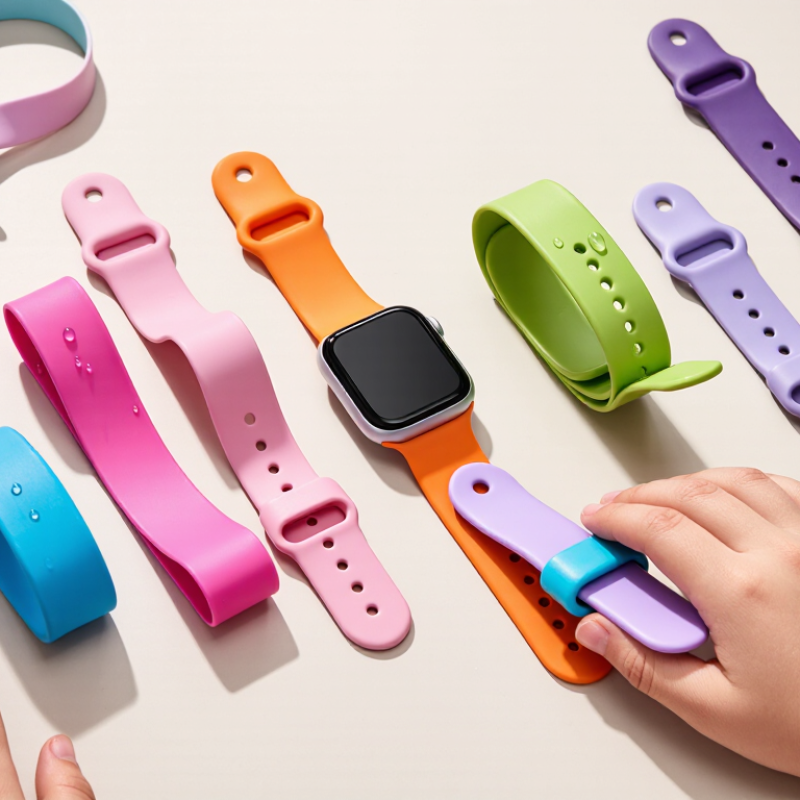
Kids’ smartwatch stretch-fit bands are flexible wrist straps designed to expand gently over a child’s hand. They usually use woven elastic, soft silicone, or a combination of both materials. Unlike buckle straps, they have no traditional holes or clasp for daily adjustment. The band relies on controlled tension to stay close to the wrist. That makes it easy for children to put on independently. It also reduces small parts that can get lost.
A suitable band should feel secure without leaving deep marks. I check whether one fingertip can slide beneath the strap after several minutes of movement. Too tight hurts. Too loose may reduce sensor contact and let the watch twist. Measure twice. Children’s wrists grow quickly, so adjustable stretch sections can offer better value than a fixed loop. However, elastic can loosen after repeated pulling, washing, or exposure to sweat. This detail is easy to overlook.
Material choice matters during real use. Breathable fabric may feel cooler during school hours, while smooth silicone often cleans faster after outdoor play. I once assumed a softer band would always be more comfortable. That assumption was wrong; trapped moisture caused irritation under one soft strap. Look for rounded edges, secure stitching, and clear care instructions. The band should remain stable during running but release without painful tugging. Check it regularly for frayed threads, cracks, stretched sections, or rough seams. A damaged band needs replacement, even when the smartwatch still works.
| Tip | What to Check | Practical Guideline | Why It Matters |
|---|---|---|---|
| 1. Confirm the Watch Fit | Check the watch case dimensions, attachment style, and band width. | Measure the existing band or the watch connection before ordering. Stretch-fit bands are not universally interchangeable. | A compatible band keeps the watch secure and prevents the device from slipping or detaching. |
| 2. Choose a Comfortable Material | Look for soft, flexible materials such as skin-friendly silicone or woven elastic fabric. | Prefer smooth edges, a lightweight construction, and materials that do not feel rough during movement. | Children may wear the watch for many hours, so comfort can affect whether they keep it on consistently. |
| 3. Select the Correct Stretch Range | Review the stated wrist-size range and compare it with the child’s wrist circumference. | Measure around the wrist without pulling the tape tightly. Leave enough room for comfortable movement, but avoid a loose fit. | A band that is too tight may cause pressure, while one that is too loose can allow inaccurate sensor readings or accidental loss. |
| 4. Check Breathability | Inspect ventilation holes, open-knit construction, or moisture-reducing surface designs. | For active children or warm climates, choose a design that allows air circulation and dries quickly. | Breathable materials help reduce sweat buildup and skin irritation during play or exercise. |
| 5. Evaluate Durability | Look at the elasticity, stitching, connection points, and resistance to stretching or tearing. | Choose reinforced attachment areas and a band that returns to its original shape after gentle stretching. | Children’s accessories are exposed to frequent movement, pulling, and contact with school or playground surfaces. |
| 6. Consider Cleaning and Water Exposure | Check whether the band can be wiped or rinsed and review the watch’s own water-resistance instructions. | Clean the band regularly with mild soap and water when permitted, then dry it thoroughly. Do not assume the band makes the watch waterproof. | Sweat, dirt, and moisture can accumulate under the band, while water exposure may damage a watch that is not designed for it. |
| 7. Inspect Safety and Skin Contact | Review material disclosures, check for sharp edges, and look for secure but easy-to-use fastening features. | Stop use if redness, swelling, itching, or discomfort appears. Keep the band clean and avoid fastening it excessively tight. | Proper skin contact and regular inspection support safer, more comfortable everyday wear. |
Note: Stretch-fit bands are elastic wristbands designed to hold a compatible smartwatch without relying solely on a traditional buckle. Fit, material, cleaning instructions, and water resistance vary by product.
It is a flexible strap that stretches over a child’s hand. Woven elastic or silicone helps it stay on the wrist without traditional holes.
It should feel secure without leaving deep marks. One fingertip should slide beneath it after several minutes of movement.
Check the watch’s exact case size and connector style. Measure the lug gap, not the screen width; a 20-millimeter band may not fit a 22-millimeter socket.
Measure the wrist with a soft tape and leave room for one finger. Compare the measurement with the band’s stated range, then check the fit again every few months.
Smooth silicone often wipes clean quickly, while breathable fabric may feel cooler at school. Neither is perfect; moisture or dust can collect beneath a band.
Look for listed materials, rounded edges, and smooth seams. A soft band can still trap moisture, so check the skin after wear.
It may work for active play, but check the watch and band’s water guidance first. Sweat and repeated pulling can weaken elastic fibers.
Replace it if you see frayed threads, cracks, loose pins, or stretched sections. A working watch does not make a damaged strap safe to keep using.
Consider how often the band may need replacement. A cheaper band can be practical, but a sturdier one may last longer; spending more is not always wiser.
Kids Smartwatch Stretch Fit Bands are flexible, slip-on accessories designed to provide a comfortable and secure way for children to wear their smartwatches. Before buying one, check that the band matches the watch’s connector style and case size, then review its stretch range to ensure it fits your child’s wrist without being too tight or loose. A good band should be soft, lightweight, breathable, and easy to adjust, especially for growing children.
Consider the band’s material, stitching, and overall construction to determine whether it can handle daily movement, play, and occasional moisture. Smooth, non-irritating surfaces are helpful for sensitive skin, while washable materials make cleaning easier. Think about your child’s routine as well: an active child may need a more durable and secure design, while a simpler option may suit occasional use. Finally, compare comfort, expected lifespan, maintenance requirements, and price so you can choose a practical band that fits both your child’s needs and your budget.