TICKTALK 6 — Free U.S. shipping · 1-year manufacturer warranty · 30-day return for refund
0%

Choosing a Kids GPS Smartwatch for international use requires more than comparing colors, screens, and advertised features. Families need dependable location updates during school commutes, playground visits, and weekend travel. This guide introduces the Top 10 Kids GPS Smartwatches for Global Buyers through practical, evidence-based criteria. We examine GPS performance, battery endurance, call quality, emergency functions, comfort, water resistance, and parent-app usability. Small details matter. A bright screen may be useful outdoors, while a weak strap can become frustrating within days.

Global compatibility also deserves careful attention. Cellular bands, SIM support, roaming options, language settings, and regional app availability can differ sharply between countries. A watch that works smoothly in London may not perform equally in Singapore, Toronto, or Nairobi. Privacy and child-safety settings should remain central, including contact controls, location-sharing permissions, and clear data policies. These features should support responsible family communication, not create unnecessary surveillance. No model is perfect. Battery estimates may change with frequent tracking, and GPS accuracy can weaken near tall buildings or indoors. Our comparisons therefore focus on realistic use rather than impressive specifications alone. Readers should still confirm network coverage and local requirements before purchasing. That step is easy to overlook. By combining technical research, user-focused observations, and transparent limitations, this overview aims to help global buyers choose a reliable, age-appropriate smartwatch with greater confidence.
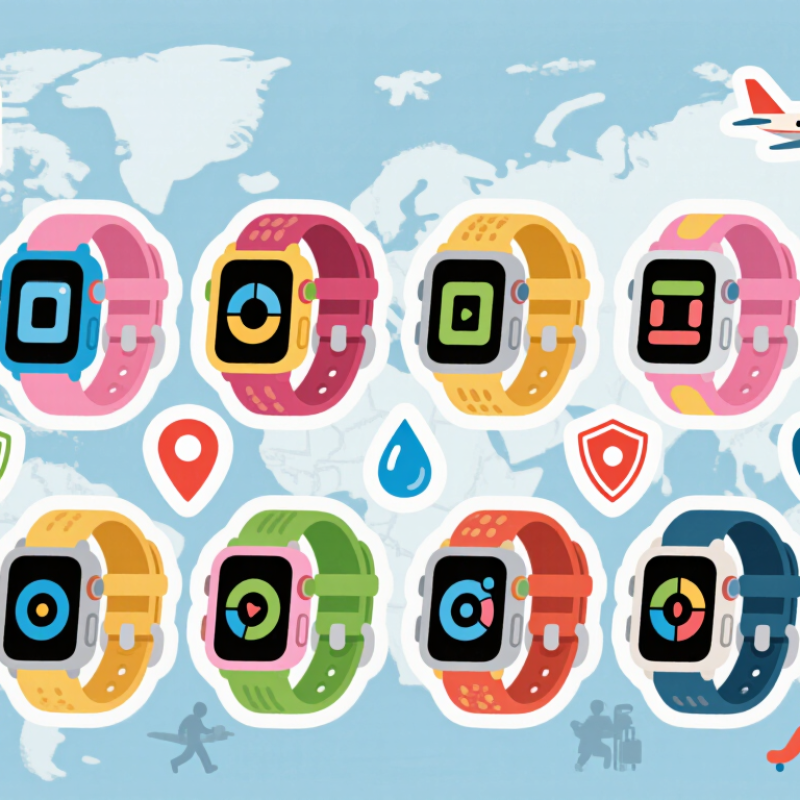
Top 10 Kids GPS Smartwatches for Global Buyers

What Kids GPS Smartwatches Are and How They Work

Kids GPS smartwatches are compact communication and location devices designed for supervised use. They usually combine satellite positioning, cellular connectivity, Wi-Fi, Bluetooth, and motion sensors. GPS estimates outdoor position from satellites. Cellular networks send that location to an approved adult’s phone. Indoors, Wi-Fi or nearby signals may improve the estimate, but accuracy can change. A child walking near tall buildings may appear several metres away. The watch is not a perfect live map.

Tips: Check network coverage before buying. Test the location feature near home, school, and busy streets. Set safe zones with realistic boundaries. Review emergency contacts carefully. Choose a model with clear privacy controls, strong battery life, and simple buttons. A small screen is useful, but difficult menus can frustrate younger children.

Most watches offer voice calls, preset messages, location sharing, and movement alerts. Some can record steps or detect removal from the wrist. These tools support communication, but they should not replace family conversations or sensible supervision. GPS may lose accuracy underground, inside buses, or during weak network coverage. Battery levels also matter; an uncharged watch cannot send updates. Families should explain when tracking is used and who can view the data. I would not treat every location alert as proof of danger. That assumption can create unnecessary worry, and the technology still needs human judgment.

Key Features to Compare Before Choosing a Model

Top 10 Kids GPS Smartwatches for Global Buyers

Key Features to Compare Before Choosing a Model

Choosing among ten children’s GPS smartwatches requires more than checking colorful screens and advertised tracking ranges. Compare location accuracy in homes, schools, and busy streets. GPS can drift near tall buildings. Cellular compatibility matters too, because network bands differ between countries. Confirm local coverage before purchase.

Safety tools deserve careful testing. Look for one-touch SOS calling, approved contact lists, and geofencing alerts. A useful geofence should notify guardians when a child leaves a defined area. Check whether calls require a subscription and whether emergency contacts can respond internationally. Some systems appear simple but hide important limits in their settings.

Battery life should match real routines, not only laboratory claims. A school-day watch needs reliable power after frequent location updates. Water resistance, screen brightness, strap comfort, and clear controls also affect daily use. Review the privacy policy, data storage location, and account protection features. Children’s location data needs serious handling. I would test alerts before relying on them, because delayed notifications can happen. No model is perfect. Pricing can also be misleading when service fees continue monthly.

Global Connectivity, Safety, Privacy, and Legal Considerations

Top 10 Kids GPS Smartwatches for Global Buyers

Global connectivity is not guaranteed by a bright screen or a strong signal icon. GSMA Intelligence estimated 4.7 billion mobile internet users in 2023. Yet rural coverage, roaming rules, and local network shutdowns can affect a child’s location updates. Compare supported bands, eSIM or SIM requirements, battery life, and emergency calling before purchase. A useful test includes a school route, an underground station, and a weak-signal area. Coverage maps can flatter reality. A perfect ranking is impossible.

Tips: Check network compatibility by country. Test location accuracy outdoors and indoors. Use the smallest necessary contact list. Disable unnecessary microphones, cameras, and advertising permissions. The ITU’s Facts and Figures 2024 reported that 5.5 billion people were online, but access quality remained uneven. Connectivity is only one safety layer.

Privacy needs equal attention. UNICEF’s Policy Guidance on AI for Children stresses data minimisation, security, and children’s best interests. Parents should review where location data is stored, how long it remains available, and whether strangers can request contact. In Europe, GDPR may require a lawful basis and stronger safeguards for children’s data. In the United States, COPPA can apply to online services collecting information from children under 13. Other countries may impose consent, transfer, or SIM-registration requirements. Read the privacy notice carefully. It is often too vague. Keep firmware updated, change default passwords, and remove the watch from shared accounts when ownership changes.

Top 10 Kids GPS Smartwatches for Global Buyers - Global Connectivity, Safety, Privacy, and Legal Considerations

Rank Anonymous Device Profile Mobile Connectivity Location Technologies Safety Functions Communication Typical Battery Range Water Protection Privacy and Security Global Buyer and Legal Notes
1 Profile A - Global LTE Safety Watch 4G LTE; requires a compatible SIM or eSIM and supported local bands GPS, Wi-Fi positioning, cellular positioning SOS button, geofencing, low-battery alerts, movement history Two-way voice calls and approved contacts; messaging depends on the companion app About 1-2 days with regular tracking and calls Usually splash-resistant; swimming suitability must be confirmed by the technical rating Parent-controlled contacts, encrypted account traffic, password protection International use depends on roaming agreements, frequency bands, emergency-service access, and local consent rules
2 Profile B - Long-Life Family Tracker 4G LTE or LTE-M; coverage varies by country and carrier GPS with Wi-Fi and cell-tower fallback SOS alert, safe-zone notifications, scheduled location checks Voice calling may be limited on LTE-M versions; app messaging is commonly supported About 3-5 days with moderate tracking Often rated for everyday splashes; not automatically suitable for immersion Useful when location retention can be adjusted and unused accounts can be deleted Check whether LTE-M is available in the destination country; confirm data-transfer and child-privacy requirements
3 Profile C - School-Friendly Contact Watch 4G LTE with SIM or eSIM; roaming may require a separate plan GPS, Wi-Fi positioning, cellular triangulation SOS key, school-mode schedule, approved-contact list, location sharing Two-way calling with whitelisted numbers; no unrestricted internet browser About 1-3 days depending on call frequency and tracking interval Commonly splash-resistant; water exposure should follow the stated IP or ATM rating Restricted contacts reduce unsolicited communication; administrator accounts should use strong passwords Schools may restrict connected wearables; obtain guardian consent and follow school safeguarding policies
4 Profile D - Travel-Oriented GPS Watch Multi-band 4G LTE; local SIM use can be more reliable than roaming GPS, assisted GPS, Wi-Fi and cellular positioning SOS, geofence alerts, route history, location-refresh control Voice calls and short messages to approved contacts About 1-2 days during frequent travel tracking Usually protected against rain and splashes; do not assume seawater or pool resistance Travel users should review cloud-storage location periods, account deletion, and cross-border transfers Verify destination frequency support, roaming charges, import requirements, and whether recording features are disabled
5 Profile E - Privacy-First Child Watch 4G LTE; cellular operation is disabled without an active compatible plan GPS and network-assisted positioning; optional location intervals Physical SOS control, configurable geofences, emergency contact escalation Approved-contact calling; limited or no third-party social applications About 2-3 days with location updates set at moderate intervals Splash resistance is typical; verify the protection rating before wet activities Best practice includes data minimization, encryption in transit, two-factor authentication, and deletion controls Child location is personal data in many jurisdictions; parental permission and transparent notices may be required
6 Profile F - Activity and Location Watch 4G LTE; cellular data is needed for remote tracking GPS, step or motion sensors, Wi-Fi positioning SOS button, activity monitoring, safe-zone alerts, guardian notifications Voice calls to approved contacts; activity features work without continuous calling About 2-4 days depending on GPS frequency and screen use Often suitable for rain and hand washing; swimming use requires an explicit rating Motion and health-related information should be optional, limited, and protected from unnecessary sharing Avoid treating consumer activity readings as medical information; review health-data rules where applicable
7 Profile G - Basic Emergency Locator 4G LTE or LTE-M; data-only service may not support ordinary voice calls GPS with cell-tower fallback for indoor or weak-signal conditions Dedicated SOS, location link, battery warning, optional tamper alert App notifications or short messages; voice capability varies by network technology About 3-7 days when location checks are infrequent Usually designed for outdoor use and light rain; verify immersion limitations Reduced features can limit data collection; administrators still need account security and access controls An SOS device is not a substitute for local emergency services; emergency numbers differ by country
8 Profile H - Family Group Tracking Watch 4G LTE with app-based account management; carrier compatibility must be checked GPS, Wi-Fi, and cell-network location Multiple guardian accounts, geofencing, SOS, location-sharing permissions Two-way calls and app messaging with permission-based family access About 1-3 days with frequent family tracking Protection commonly covers splashes; check seals after charging-port exposure Access should be removed promptly when a guardian changes; shared links should have expiration controls Use only necessary family members as authorized users and comply with local consent and surveillance laws
9 Profile I - Compact International Watch Multi-band 4G LTE; compatibility depends on regional LTE bands and SIM unlocking GPS, assisted GPS, Wi-Fi and cellular positioning SOS, safe-zone notifications, scheduled tracking, device-removal warning Approved-contact calls and app messaging; internet access may be restricted About 1-2 days because of the smaller battery size Usually splash-resistant; compact designs may have stricter charging-port limitations Check firmware-update support, vulnerability reporting, encryption, and the length of security support Importers should verify radio certification, labeling, battery transport rules, and local telecommunications approval
10 Profile J - Feature-Rich Connected Watch 4G LTE; may require a specific subscription or approved carrier profile GPS, Wi-Fi positioning, cellular fallback, and motion sensors SOS, geofencing, location history, activity tools, reminders, and guardian alerts Calls, voice messages, and approved app functions; features vary by region About 1-2 days with regular screen, GPS, and communication use Water resistance varies widely; never infer swimming suitability from splash resistance alone More features create more data exposure; disable microphones, cameras, contacts, and analytics when unnecessary Review age ratings, in-app purchases, biometric or voice-data policies, and regional restrictions before purchase

Important: Battery life, water resistance, GPS accuracy, roaming availability, supported LTE bands, and legal requirements vary by device configuration, network, country, weather, indoor conditions, and usage. Buyers should verify the current technical specification, carrier compatibility, privacy policy, warranty terms, and applicable child-safety and data-protection laws before purchase.

Top 10 Kids GPS Smartwatches Compared by Use Case

The top ten kids GPS smartwatches should be compared by real family use cases, not flashy specifications. For school days, choose a light watch with silent mode, approved-contact calling, and location updates that do not drain the battery before pickup. For travel, prioritize broad network compatibility and reliable roaming. Ericsson’s Mobility Report, November 2024, estimated 5.6 billion smartphone subscriptions worldwide, showing why network support varies sharply across regions.

For outdoor play, water resistance, visible location history, and a strong strap matter more than a colorful screen. Geo-fencing suits children walking between home and school, but alerts need sensible boundaries. A 300-meter radius may fit a city block, yet fail near rural roads. Emergency-focused models should offer a simple SOS control, two-way voice, and clear battery warnings. Keep it simple. For younger children, fewer apps can reduce distraction and accidental contacts.

Privacy is another use case: families should examine data retention, account permissions, and whether location sharing can be disabled. The GSMA Mobile Economy 2024 report highlights affordability and network availability as major drivers of mobile adoption. That makes subscription cost part of device performance. Independent testing is still uneven, and advertised battery life often assumes limited tracking. A ranking can mislead when every child’s routine differs. Parents should test the watch for one week before trusting it on a long trip.

Top 10 Kids GPS Smartwatches Compared by Use Case

Typical battery runtime varies according to GPS frequency, cellular coverage, calling, location sharing, and standby time.

Category-level benchmarks are based on commonly published operating ranges for GPS-enabled children's smartwatches. Continuous location tracking and frequent calls generally reduce battery life, while standby use extends it.

Buying, Setting Up, and Maintaining a Kids GPS Smartwatch

Top 10 Kids GPS Smartwatches for Global Buyers

Buying, Setting Up, and Maintaining a Kids GPS Smartwatch

A reliable kids GPS smartwatch should match the child’s age, routine, and local network coverage. Check GPS accuracy, battery capacity, water resistance, screen readability, and strap comfort before purchasing. Cellular compatibility matters greatly across countries, so confirm supported networks and service costs in the child’s region. Do not select a model by battery size alone. Frequent location updates can drain power quickly. Privacy controls, contact limits, and secure account access also deserve careful attention.

Charge the watch fully before setup. Install available firmware updates, connect it to the approved control app, and create only necessary contacts. Set location permissions carefully, then test calling, GPS tracking, and emergency features outdoors. Test it twice. A tall building, thick walls, or dense trees may reduce location accuracy. Explain the device to the child in simple words, including when to wear it and how to ask for help. Avoid creating unrealistic location boundaries that trigger constant alerts.

Maintenance is mostly routine. Clean the charging contacts weekly, inspect the strap for cracks, and recharge it before busy days. Review privacy settings after major updates. Test the emergency function every few months without causing panic. One common setup mistake is ignoring time-zone changes during travel. Another is forgetting that the watch may lose service in remote areas. These limitations require honest expectations, not blind dependence. Children also outgrow straps and interfaces, so reassess comfort and usability as they develop.

FAQS

What is a kids GPS smartwatch?

It is a small device for supervised communication and location sharing. It may use satellites, cellular networks, Wi-Fi, Bluetooth, and motion sensors. Battery matters.

How does the watch estimate a child’s location?

Satellites usually estimate outdoor position. Cellular networks send updates to an approved adult’s phone. Wi-Fi and nearby signals may help indoors.

Is the location always accurate?

No. Tall buildings, buses, underground areas, and weak networks can reduce accuracy. A child may appear several metres away. It is not a perfect live map.

What should families test before buying?

Check network compatibility in every intended country. Test the watch near home, school, busy streets, and underground stations. Test it outdoors.

What features can support everyday communication?

Common features include voice calls, preset messages, movement alerts, and location sharing. Some watches count steps or detect removal from the wrist. Simple buttons help younger children.

How can parents create safer tracking habits?

Set realistic safe zones around familiar places. Use the smallest necessary contact list. Explain when tracking happens and who can view the data.

What privacy settings deserve careful review?

Check where location data is stored and how long it remains available. Disable unnecessary microphones, cameras, and advertising permissions. Change default passwords. The notice may be vague.

What legal and connectivity issues should global buyers consider?

Local rules may govern children’s data, consent, transfers, and SIM registration. Roaming rules and network shutdowns can interrupt updates. Coverage maps can flatter reality.

Can tracking replace adult supervision?

No. A location alert is not proof of danger. Human judgment still matters, and family conversations remain important. I would not trust every alert.

Conclusion

A Kids GPS Smartwatch is a wearable device designed to help parents stay connected with children through location sharing, calling, messaging, and selected safety tools. This guide explains how GPS, mobile networks, Wi-Fi, and positioning technologies work together, while highlighting key features to compare, including location accuracy, battery life, communication options, durability, ease of use, emergency functions, parental controls, and age-appropriate design. It also considers global connectivity, data privacy, account security, consent, and regional requirements that may affect device use.

The comparison of the top 10 Kids GPS Smartwatch options is organized by practical use cases, such as everyday communication, travel, outdoor activities, school routines, and basic location tracking. Readers will also find guidance on choosing a suitable model, checking network compatibility, configuring trusted contacts and safety zones, teaching children responsible use, maintaining the device, updating software, and reviewing privacy settings regularly.


Ethan Carter

Ethan Carter

Ethan Carter is a professional marketing specialist dedicated to helping businesses understand, evaluate, and benefit from high-quality products and practical solutions. With a strong background in market research, content strategy, customer communication, and product education, Ethan brings......