TICKTALK 6 — Free U.S. shipping · 1-year manufacturer warranty · 30-day return for refund
0%

A Child Safety Wearable Device is a small, connected tool designed to help caregivers understand a child’s location, communicate during daily routines, and respond during emergencies. It may appear as a watch, clip, bracelet, or compact tracker. Many models include GPS positioning, two-way calling, an SOS button, geofencing alerts, and location history. A child walking home may press one button and reach a parent. A caregiver may receive an alert when the child leaves a defined school area.

The category is practical, but it is not magical. Battery life can fail. Indoor positioning may be inaccurate. A device can also distract children or create unnecessary anxiety. Parents should check comfort, water resistance, data protection, emergency functions, and age suitability before choosing one. Clear family rules matter as much as the hardware. Children need to know when tracking is used and why.

Chris Hulls, co-founder and CEO of Life360, has described the company’s purpose in simple terms: “We help families live a better life.” That idea fits the wider Child Safety Wearable Device industry, when technology supports trust rather than replacing it. Experts should examine real-world performance, not only attractive specifications. A bright screen and colorful strap prove very little. The strongest device is one that works quietly during ordinary moments, such as a crowded station, a missed pickup, or a sudden change in plans. Still, no product removes every risk. That limitation deserves honest attention.
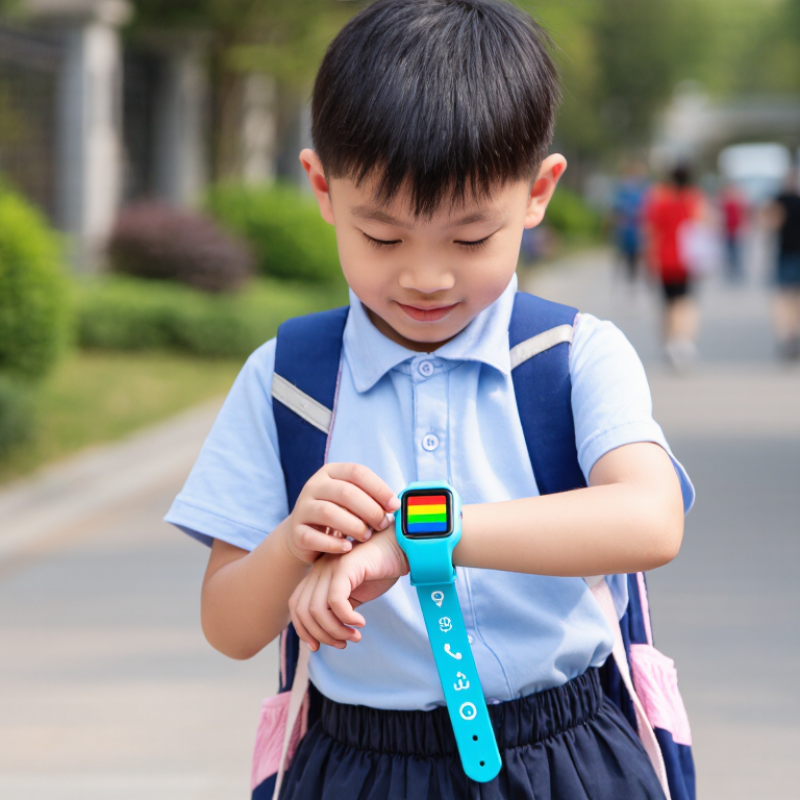
What Is a Child Safety Wearable Device?

Definition and Purpose of a Child Safety Wearable Device

A child safety wearable device is a small electronic tool worn on a child’s wrist, clothing, or backpack. Its purpose is to support communication, location awareness, and emergency assistance. Depending on its design, it may use GPS, cellular signals, geofencing, voice communication, or a simple alert button. Some devices also record movement or basic health information. These features can help caregivers respond when a child becomes separated, feels unsafe, or needs attention.

In daily use, reliability matters more than a long feature list. Location signals can weaken inside buildings, near tall structures, or during poor network coverage. Battery life may also change with frequent tracking. A wearable should support supervision, not replace it. Parents and guardians should explain how the device works and respect the child’s developing sense of privacy. Clear consent, secure passwords, and limited data sharing are practical safeguards. I have found that simple routines often work better than complicated settings. Still, every family should question whether constant tracking is truly necessary.

Tips: Test the alert function regularly. Check the battery before outings. Keep emergency contacts current. Teach the child when to press the alert button. Review location permissions carefully, and avoid relying on the device alone. A calm conversation can reveal problems that technical settings miss.

What Is a Child Safety Wearable Device?

A child safety wearable device is a small, body-worn product that can help caregivers communicate with a child, identify the child’s approximate location, and receive alerts when the child moves beyond a defined area. The chart shows typical signal ranges used by common positioning technologies in these devices.

How to read the chart: GPS generally provides outdoor location accuracy of about 5–10 meters under good conditions. Wi-Fi positioning can estimate an indoor location within approximately 10–50 meters, while Bluetooth is mainly useful for short-range proximity detection, typically around 1–10 meters. Actual performance depends on signal availability, buildings, weather, and device design.

Core Features and Technologies

What Is a Child Safety Wearable Device?

Core Features and Technologies

A child safety wearable is a connected device worn on the wrist, clothing, or backpack. It can support location sharing, voice communication, emergency alerts, and activity monitoring. The device usually combines GPS, cellular connectivity, Wi-Fi, Bluetooth, and motion sensors. GPS may work poorly indoors. That limitation matters.

Location accuracy depends on signal strength, building materials, and device settings. Assisted GPS can improve outdoor positioning, while Wi-Fi positioning may help inside schools or shopping centers. According to GSMA Intelligence’s The Mobile Economy 2024, more than 5 billion people use mobile internet worldwide. This expanding network supports connected safety tools, but coverage still varies between regions.

Privacy and reliability should guide every feature. Encryption protects data during transmission, while role-based access limits who can view a child’s location. NIST guidance on digital identity stresses stronger authentication and careful account management. A useful device should also include geofencing, low-battery warnings, tamper alerts, and an easily reachable help button. Simple controls help during stressful moments.

However, no wearable can replace attentive care. Battery failure, inaccurate maps, or delayed signals can create false confidence. Parents should test alerts, review permissions, and explain the device’s purpose to children. The technology is helpful, but not perfect.

How Child Safety Wearables Support Caregivers

A child safety wearable is a small connected device worn on the wrist, clipped to clothing, or carried nearby. It may share location, provide two-way communication, or send alerts when unusual movement occurs. For caregivers, its main value is reducing uncertainty during school trips, crowded events, and outdoor play. Pew Research Center reported in 2024 that 95% of U.S. teenagers have smartphone access. However, younger children may need simpler tools with fewer distractions.

Caregivers can use these devices to create agreed safety routines. A location update can confirm that a child reached school, while a voice feature can support a quick check-in. The National Center for Missing & Exploited Children recorded 29,568 missing-child reports in 2023. This figure does not prove wearables prevent incidents, but it shows why practical communication matters. Alerts should support judgment, not replace supervision. Location data can also be wrong. Buildings, poor signals, and low batteries create uncomfortable gaps.

Tips: Choose clear emergency controls, test them monthly, and explain each feature to the child. Set boundaries for tracking and avoid constant checking. Review privacy settings, battery life, and contact permissions before daily use. Keep a backup plan, such as a meeting point or trusted adult. Technology helps most when families practice using it calmly. Mistakes will happen. A wearable should make care more organized, not make children feel watched every minute.

Types of Child Safety Wearable Devices

What Is a Child Safety Wearable Device?

A child safety wearable device is a small electronic tool worn on the wrist, shoe, clothing, or backpack. It can help caregivers check a child’s location, contact them, or receive health-related alerts. Its value depends on careful setup, reliable charging, and age-appropriate use. It should support supervision, not replace a conversation about safe boundaries.

Types of Child Safety Wearable Devices

GPS trackers are designed for location awareness. Some show a child’s position on a secure caregiver app, while others create alerts when the child leaves a defined area. A playground gate, school entrance, or bus stop can become a practical safety boundary. Location accuracy may weaken indoors, underground, or in crowded places.

Smartwatches may offer calling, voice messages, emergency contacts, and location sharing. Models with limited functions can reduce distractions, but caregivers should still review contact permissions and privacy settings. A watch with a camera or microphone requires extra care around consent and data protection.

Health-focused wearables can monitor movement, heart rate, temperature, or falls. These features may help families notice unusual changes, but they are not medical diagnoses. Medical guidance is important when readings appear concerning. Identification bands are simpler, too. They can display essential contact details during outings or travel.

No device is perfect. Batteries can die, signals can fail, and children may remove the device. A realistic safety plan includes testing alerts, checking the fit, and teaching the child what to do when technology fails.

What Is a Child Safety Wearable Device? - Types of Child Safety Wearable Devices

Device Type Main Safety Function Typical Connectivity Location Accuracy and Coverage Typical Battery Pattern Useful Features Important Limitations
GPS Safety Watch Allows caregivers to check a child's approximate location and receive selected safety alerts. Usually combines satellite positioning with cellular data; some models also use Wi-Fi and Bluetooth. Outdoor positioning is generally more accurate than indoor positioning. Coverage depends on available cellular networks and satellite visibility. Often requires charging every one to several days, depending on tracking frequency, calls, screen use, and signal strength. Geofencing, location sharing, emergency contacts, two-way communication, and scheduled check-ins. Requires regular charging and may need a service plan. A location alert is not a substitute for adult supervision.
Cellular SOS Pendant Provides a simple emergency button that can contact predefined caregivers or an assistance service. Uses a cellular network; some devices include satellite positioning for location reporting. Can report location where cellular service is available. Indoor and underground accuracy may be reduced. Commonly lasts several days to multiple weeks, depending on location updates, voice use, and device design. Large emergency button, voice communication, automatic alerts, and wearable attachment options. It may offer fewer everyday functions than a watch. Cellular availability and caregiver response procedures are essential.
Bluetooth Finder Tag Helps locate an attached item, such as a bag, coat, or school equipment, when it is within Bluetooth range or detected by a compatible device network. Bluetooth Low Energy; some systems use nearby participating smartphones to relay an approximate location. Short-range proximity location is useful nearby. Network-based location depends on other compatible devices being present. Often operates for many months or longer on a replaceable or rechargeable coin-cell-style battery, depending on the model. Nearby-item finding, last-known-location records, separation notifications, and sound alerts. It is primarily an item finder, not a dedicated child-tracking or emergency-communication device. It normally cannot provide continuous GPS tracking.
Child-Friendly Smartwatch Combines basic communication, scheduling, activity, and selected safety functions in a wrist-worn device. May use Wi-Fi, Bluetooth, and cellular connectivity; features vary considerably by model. Location performance depends on whether the watch uses GPS, Wi-Fi positioning, cellular data, or a combination of these. Usually needs charging daily or every few days when communication, GPS, and screen features are used frequently. Approved contacts, school-mode schedules, reminders, location sharing, and emergency calling. More features can increase distraction, privacy exposure, and battery consumption. Age suitability and parental controls should be checked.
Medical Alert Wearable Supports children with specific medical or developmental needs by sending assistance alerts or sharing selected health information. May use Bluetooth to connect to a nearby phone or hub, with cellular connectivity available in some designs. Location capability is not universal. Some devices report location only through a connected phone or cellular service. Ranges from several days to several weeks, depending on sensors, communication frequency, and alert activity. Emergency buttons, fall or motion alerts, medication reminders, heart-rate monitoring, or caregiver notifications. Health measurements may not be diagnostic. Device selection should be discussed with an appropriate healthcare professional.
Activity and Motion Sensor Records movement patterns and can notify caregivers about selected activity or inactivity events. Usually uses Bluetooth to synchronize with a caregiver's phone or a nearby hub. Usually does not provide independent real-time location. Any location information normally comes from the connected phone. Often lasts several days to several weeks, depending on sensor activity and synchronization frequency. Movement trends, sleep estimates, inactivity notifications, and routine monitoring. Movement data cannot reliably confirm a child's safety, and readings may be affected by fit, motion, or sensor limitations.
Personal Safety Alarm Draws attention during a concerning situation by producing a loud sound or activating a visible signal. Generally operates without a network connection; some versions can pair with a phone for notifications. Does not normally track location. Its effectiveness depends on people nearby hearing or seeing the alert. Usually remains ready for long periods; battery life depends on alarm use and whether the device includes lights or wireless functions. Pull pin or button activation, loud siren, flashing light, compact form, and simple operation. It cannot contact caregivers by itself unless paired with another connected system, and children need age-appropriate instruction before use.

Note: Battery life, positioning accuracy, connectivity, subscription requirements, and emergency features vary by device and local network conditions. Wearable devices should support—not replace—caregiver supervision and an agreed family safety plan.

Privacy, Safety, and Usage Considerations

What Is a Child Safety Wearable Device?

Privacy, Safety, and Usage Considerations

A child safety wearable is a small connected device worn on a wrist, clipped to clothing, or carried in a bag. It may offer location sharing, voice communication, emergency alerts, or activity checks. In practice, its value depends less on its features and more on careful daily use. A device with a dead battery provides no protection.

Privacy deserves equal attention. Parents should understand what data the device collects, where it is stored, and who can access it. Location history can reveal school routines, home addresses, and sensitive family patterns. Choose short retention periods when possible. Review account permissions regularly. Avoid sharing access with unnecessary contacts. Children also deserve an age-appropriate explanation and a chance to ask questions. Constant monitoring may improve reassurance, but it can weaken trust.

Safety settings need testing before real use. Walk through an emergency alert near home, check the speaker volume, and confirm that trusted contacts receive notifications. Test battery life during a normal school day. Some alerts may trigger accidentally. Others may fail indoors, underground, or during poor network coverage. Follow school rules and local privacy requirements, which can differ by region. Do not treat the wearable as a replacement for supervision, teaching, or a child’s judgment. The difficult part is balance. More tracking is not always more safety.

FAQS

What is a child safety wearable?

It is a small connected device worn on a wrist, clipped to clothing, or carried in a backpack. It may share location, support voice calls, and send emergency alerts. Some devices also detect movement or tampering. It helps organize care. It does not replace supervision.

How does location tracking work?

The device may combine GPS, mobile networks, Wi-Fi, and Bluetooth. GPS usually performs better outdoors. Thick walls can reduce accuracy. Indoor locations may appear several meters away. Check the map before reacting.

Can caregivers rely on location updates completely?

No. Low batteries, weak signals, and crowded buildings can delay updates. A location pin may look precise but still be wrong. Caregivers should use updates as clues, not proof. That distinction is easy to forget.

What emergency features are useful?

A large help button can send an alert to approved contacts. Two-way voice communication may support a quick check-in. Low-battery warnings and tamper alerts add practical value. The child should practice pressing the button calmly.

How should families protect location privacy?

Use strong account authentication and limit access to trusted caregivers. Review contact permissions regularly. Turn off unnecessary sharing features. Explain who can see the child’s location. Privacy settings are not “set and forget.”

How often should the device be tested?

Test alerts, voice calls, and location updates at least monthly. Check the battery before school trips or crowded events. Walk through the emergency steps near the front door. Testing exposes awkward problems early.

Should a child be tracked constantly?

Constant checking can make children feel watched every minute. Set clear tracking boundaries with the child. Use location checks for agreed routines, such as arriving at school. Caregivers may still check too often. Reflection helps.

What backup plan should families keep?

Choose a meeting point, such as a library entrance or reception desk. Identify one trusted adult nearby. Write down essential contact details. The wearable may fail. A simple plan can still work.

Conclusion

A Child Safety Wearable Device is a compact electronic product designed to help caregivers monitor a child’s well-being, location, and ability to communicate when they are apart. It may combine GPS or location services, wireless connectivity, an emergency contact button, voice communication, activity monitoring, and alerts for situations such as leaving a designated area or experiencing unusual inactivity. These features can provide caregivers with timely information while supporting a child’s growing independence in an age-appropriate way.

Child safety wearables come in forms such as watches, clip-on devices, and wearable tags, each suited to different ages and daily routines. Before use, caregivers should consider comfort, durability, battery life, signal availability, and ease of operation. Privacy and safety are equally important: collect only necessary information, use strong account protection, explain the device to the child, and review location-sharing settings regularly. A wearable should support responsible supervision rather than replace communication, trust, or attentive caregiving.


Ethan Carter

Ethan Carter

Ethan Carter is a professional marketing specialist dedicated to helping businesses understand, evaluate, and benefit from high-quality products and practical solutions. With a strong background in market research, content strategy, customer communication, and product education, Ethan brings......