For families comparing connected devices across markets, a 4G LTE Kids Smartwatch offers more than colorful games. It can support voice calls, location sharing, and emergency contact features through cellular networks. Unlike Wi-Fi-only watches, it may remain connected during school trips, outdoor activities, or travel between cities. That practical difference matters to global buyers.
However, mobile connectivity is never automatic. Parents should verify supported LTE bands, SIM or eSIM requirements, carrier compatibility, roaming charges, and regional service availability. A watch sold in one country may perform differently elsewhere. Check the details carefully. GPS accuracy can also change near tall buildings, indoors, or under heavy tree cover. Real-world testing matters more than attractive packaging.
Safety and privacy deserve equal attention. Look for clear parental controls, secure account access, reliable location permissions, and transparent data policies. Battery life should match daily routines, especially when GPS tracking is active. Water resistance, screen durability, and comfortable sizing also influence everyday use. Independent reviews and manufacturer documentation can help confirm these claims. Still, no device is perfect. Network outages happen. Location data may be delayed. Some children may find constant connectivity distracting. This guide examines the strengths and limitations of a 4G LTE Kids Smartwatch, helping international families make a careful, informed choice based on coverage, safety, cost, and actual household needs.
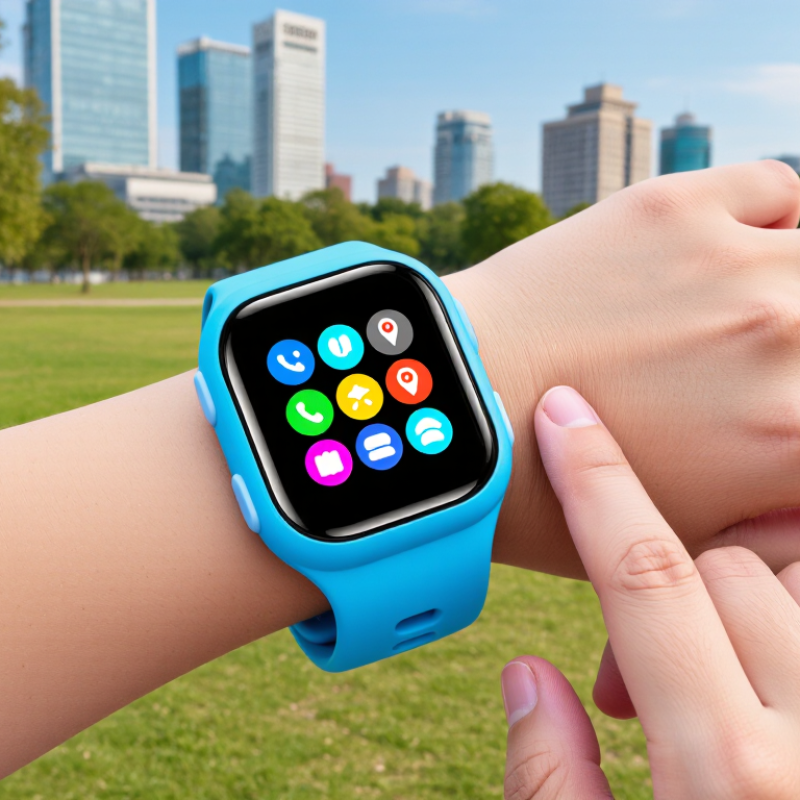
A 4G LTE kids smartwatch is a wrist-worn device with a cellular modem, GPS, and child-focused safety tools. It connects to a mobile network without staying near a parent’s phone. Depending on the model, children can make approved calls, send voice messages, share location, and use an emergency contact button.
The watch usually needs a compatible SIM or eSIM and a suitable monthly plan. Global buyers should check LTE frequency bands, local carrier support, roaming rules, and network shutdown plans. GPS can show outdoor movement clearly, but indoor accuracy may weaken near thick walls. Battery life also changes with tracking frequency, weak signals, and frequent calls. A watch may look advanced. Yet it still requires adult setup, charging, and regular software updates. It should support communication, not replace careful supervision.
Tips: Confirm network compatibility before purchase. Test location accuracy near home and school. Review privacy settings, contact approval, and data storage policies. Ask whether the emergency feature reaches family members or local services, because these functions differ by country. A waterproof rating is useful during rain, but it does not guarantee protection in every situation. I would also check the strap and screen after real daily use; small design flaws can matter more than impressive specifications.
Why Choose a 4G LTE Kids Smartwatch for Global Buyers?
How 4G LTE Connectivity Supports Global Family Communication
A 4G LTE kids smartwatch can keep families connected across borders. It supports voice calls, short messages, location updates, and emergency contact features without relying only on nearby Wi-Fi. This matters during airport transfers, school trips, or crowded tourist streets. Ericsson’s November 2024 Mobility Report recorded about 4.9 billion 4G subscriptions worldwide in 2024. The figure shows how widely established LTE networks remain.
Coverage is still the difficult part. A watch may support 4G, yet local bands, roaming rules, and SIM compatibility can limit service. Parents should check the destination’s network frequencies before buying. The ITU’s Facts and Figures 2024 report found that 5.5 billion people were online, but billions still faced access gaps. Therefore, reliable LTE can offer practical support where home internet is unavailable. It is not a magic bridge. Indoor walls, rural roads, and weak signals can interrupt contact.
Tips: Choose a model supporting common LTE bands in your target countries. Confirm roaming costs and emergency calling requirements with the carrier. Test calling and location sharing before travel. Keep expectations realistic; location data may refresh slowly in dense buildings. Battery life also deserves attention, because frequent tracking can shorten daily use. A small charging routine helps.
Why Choose a 4G LTE Kids Smartwatch for Global Buyers?
A useful kids smartwatch begins with dependable communication. GSMA Intelligence’s Mobile Economy 2024 report states that 4G represented about 60% of global mobile connections in 2023. This broad network layer can support calls, voice messages, and SOS alerts across many markets. However, coverage still varies between cities, rural roads, and indoor spaces. Buyers should check local LTE bands before purchasing.
Location accuracy matters more than attractive maps. A reliable watch should combine GPS, Wi-Fi positioning, and nearby cell signals. GPS can locate a child outdoors, while Wi-Fi and cellular data help indoors. Geofencing should send a clear alert when a child leaves a chosen area. Location updates must also show a timestamp. Without it, a parent may mistake an old position for a current one.
Safety controls should include two-way calling, approved contacts, school-time restrictions, and a physical SOS button. The system should explain who receives alerts and how long location data remains stored. The 2024 Ofcom Children and Parents report highlights continuing parental concerns about children’s online safety and communication. Privacy settings therefore deserve equal attention. No location method is perfect. Battery loss, weak signals, or a forgotten charger can interrupt protection. I would test the watch on a normal school route before trusting it during travel.
Compatibility needs more than a 4G label. Check supported LTE bands, VoLTE, SIM type, and local network certification. GSMA Intelligence reported that 4G represented about 60% of global mobile connections in 2023. However, network availability differs sharply between countries and rural areas. Confirm the carrier’s LTE bands before purchase. A roaming plan may support data but exclude voice calls. That detail is easy to miss.
Durability should be tested against real family routines. IEC 60529 defines IP67 as dust protection and temporary water immersion up to one metre. It does not guarantee protection from swimming, soap, or repeated drops. Look for a recessed screen, secure strap, and a charging port cover. The IEC rating helps, but it is not a complete safety promise. Children are rough testers.
Battery claims need practical evidence. A manufacturer’s standby figure may exclude GPS tracking, voice calls, and frequent location updates. Ericsson’s Mobility Report shows continuing growth in mobile data use, making power demand harder to predict. Test the watch for one school day with location updates enabled and several short calls. A capacity figure alone can mislead. In my view, two days of light use is less useful than one dependable day under active tracking. Results may vary with weak signals, temperature, and network congestion. That uncertainty deserves honest attention.
Why Choose a 4G LTE Kids Smartwatch for Global Buyers?
What Should Global Buyers Check Before Purchasing?
A 4G LTE kids smartwatch can support calls, location sharing, and emergency communication without a nearby phone. GSMA Intelligence reported that 4G represented about 60% of global mobile connections in 2023. Ericsson’s Mobility Report also expects 4G to remain widely available through 2029. Network longevity matters for families buying across different countries.
Check the supported LTE bands before checking the design. A watch may work well in one country but fail after import. Confirm SIM or eSIM compatibility, roaming rules, and local carrier support. Ask for exact frequency bands, not only “global version.” That phrase can be vague. Battery testing should include GPS use, voice calls, and weak-signal areas. A one-day battery claim may not survive real school routines.
Safety details deserve equal attention. Review location accuracy, contact approval, remote controls, and data deletion options. ETSI EN 303 645 offers useful baseline guidance for consumer IoT security. Look for secure updates and clear privacy policies. The device should also state its water-resistance rating, charging protection, and relevant electrical certifications. Independent tests are more reliable than product-page promises. Still, even a careful checklist can miss poor software updates or unstable roaming. Test the watch with a local SIM before wider deployment, when possible.
| No. | What to Check | Practical Benchmark or Factual Standard | Why It Matters for Global Buyers | Buyer Verification |
|---|---|---|---|---|
| 1 | 4G LTE band compatibility | The watch should support the LTE bands used by the target country and carrier. Common bands vary significantly by region; no single band set works everywhere. | A watch may be technically 4G-enabled but still fail to register on a local network if key bands are missing. | High priority Compare the complete LTE band list with the intended carrier's published frequency bands before ordering. |
| 2 | VoLTE and network shutdown readiness | Voice calling should support VoLTE. Buyers should not rely on 2G or 3G-only calling because many operators are retiring or restricting older networks. | Without compatible VoLTE, calling and SOS functions may stop working after a local 2G or 3G shutdown. | Ask whether VoLTE is supported on the target carrier and whether the device firmware is approved for that network. |
| 3 | SIM, eSIM, and carrier locking | Check whether the device uses a nano-SIM, embedded SIM, or a provider-specific activation system. Confirm that it is unlocked for the destination market. | A locked device or incompatible SIM format can prevent activation even when the hardware supports the correct LTE bands. | Request the supported SIM format, APN requirements, activation process, and written confirmation of network-unlocked status. |
| 4 | Roaming and cross-border use | International roaming, permanent roaming, and cross-border operation depend on both the watch service and the mobile operator. They are not automatic features of 4G LTE. | Families traveling between countries may face loss of service, extra charges, or restrictions on permanently roaming SIMs. | Check supported roaming countries, data limits, voice charges, fair-use rules, and whether a local SIM can be used. |
| 5 | Location technology | Useful systems may include GPS, assisted GPS, Wi-Fi positioning, and cellular positioning. GPS performance is generally better outdoors with a clear view of the sky than indoors. | Location accuracy and update speed affect safe-zone alerts, route history, and emergency response. | Request test results for outdoor, indoor, urban, and low-signal environments. Confirm whether location updates require a paid service plan. |
| 6 | SOS and emergency calling | An SOS button should be easy to press, support multiple emergency contacts, and clearly state whether it calls contacts, an emergency number, or a monitoring service. | SOS functions require battery power, network coverage, correct setup, and local emergency-number compatibility. | Test the complete SOS sequence in the destination country. Confirm contact limits, call recording rules, and what happens when the network is unavailable. |
| 7 | Battery capacity and real operating time | Compare rated standby, normal-use, and intensive-use time rather than battery capacity alone. Frequent GPS tracking, voice calls, and weak signal conditions consume more power. | A depleted battery can disable communication and location features when they are most needed. | Ask for test conditions, charging time, battery replacement policy, charger input specifications, and low-battery alert behavior. |
| 8 | Water and dust resistance | An IP67 rating generally indicates dust protection and temporary immersion in up to 1 metre of water for up to 30 minutes under laboratory conditions. It does not automatically mean the watch is suitable for swimming. | Water resistance can reduce damage from rain and hand washing, but misuse may not be covered by warranty. | Check the exact IP rating, test standard, port-cover design, restrictions on salt water or hot water, and warranty exclusions. |
| 9 | Child-focused design and fit | Look for a readable screen, secure strap, rounded edges, manageable weight, simple controls, and a size appropriate for the child's wrist. | Comfort and usability determine whether the child will wear the device consistently and use SOS or calling functions correctly. | Compare watch dimensions, weight, strap adjustment range, screen visibility, button size, and accessibility options. |
| 10 | Parent app and account controls | Important controls may include approved contacts, school-mode scheduling, geofencing, location history, remote configuration, and device removal. | A strong watch feature set is less useful if the companion app is unavailable, unstable, or difficult to manage in the buyer's country. | Check supported operating systems, app-store availability, language options, account recovery, multi-parent access, and update frequency. |
| 11 | Privacy and children's data protection | Review how the service handles location, voice, contacts, photos, device identifiers, and account data. Requirements may differ by jurisdiction, including rules such as the GDPR and COPPA. | Children's location and communication data are sensitive and may be transferred or stored across borders. | Read the privacy policy, data-retention period, deletion process, hosting locations, encryption details, and parental-consent procedure. |
| 12 | Radio, electrical, and market compliance | Depending on the destination, buyers may need evidence of applicable radio and safety compliance, such as CE, FCC, UKCA, or other local requirements. Requirements vary by market. | Non-compliant products may be delayed at customs, restricted from sale, or difficult to support through local distributors. | Request the declaration of conformity, test reports where appropriate, radio-frequency information, charger safety documents, and importer details. |
| 13 | Subscription and total ownership cost | Calculate the full cost of the watch, SIM or eSIM service, data plan, activation, roaming, app subscription, taxes, shipping, and replacement accessories. | A low purchase price can become expensive when location tracking or cloud functions require a recurring fee. | Request a 12-month and 24-month cost estimate, cancellation terms, data allowance, overage fees, and payment methods accepted in the destination country. |
| 14 | After-sales support and warranty | Confirm warranty duration, return address, repair method, replacement-part availability, software-support period, and response times for international customers. | International returns and repairs may involve customs paperwork, high shipping costs, and long service delays. | Obtain written warranty terms and verify whether support is provided in the buyer's language and time zone. |
| 15 | Firmware updates and lifecycle | The supplier should provide a documented update process and security-maintenance policy. Updates may be delivered through the companion app or over the air. | Updates can improve network compatibility, security, reliability, and compliance with changing carrier requirements. | Ask how long updates are expected to continue, whether updates can be installed internationally, and what happens if the app service is discontinued. |
Note: Specifications, network availability, roaming rules, regulatory requirements, and subscription terms vary by country, carrier, software version, and service provider. Always verify the current details for the destination market before purchase.
It is a wrist-worn device with cellular connection, GPS, and child-focused safety tools. Children may call approved contacts, send voice messages, and share location.
No. It can connect directly to a mobile network. However, adults still need a phone or app for setup, monitoring, and controls.
Check LTE frequency bands, SIM or eSIM support, local carrier coverage, roaming rules, and network shutdown plans. “Global version” may be unclear.
Ask for exact frequency bands and confirm them with a local carrier. Testing the watch with a local SIM is safer when possible.
GPS usually works clearly outdoors. Thick walls can reduce indoor accuracy. Test the location near home, school, and other daily places.
Battery life changes with tracking frequency, calls, weak signals, and charging habits. A claimed one-day battery may not fit busy school routines.
Review approved contacts, location sharing, emergency buttons, remote controls, and data deletion options. Emergency functions differ by country.
Not always. It may contact selected family members instead. Confirm the exact process before relying on it.
They are essential. Look for clear data policies, secure updates, limited contact access, and practical deletion controls. Privacy details can be easy to overlook.
No. A water-resistance rating helps during rain, but it does not guarantee protection in every situation. Check the rating carefully.
No. It supports communication and location awareness. Adults still need to charge it, update software, approve contacts, and supervise children.
Check the strap, screen, charging connection, and comfort after daily use. Small design problems may matter more than impressive specifications.
A 4G LTE Kids Smartwatch is a wearable device designed to help children stay connected with parents through mobile networks, without relying only on nearby Wi-Fi. It can support voice calls, messaging, and selected communication tools, making it useful for families living in different regions or traveling internationally. Parents should also consider safety functions such as GPS location sharing, location history, virtual boundaries, emergency contacts, and an easy-to-use help button. These features can improve communication and provide reassurance while respecting the child’s privacy and independence.
For global buyers, compatibility is essential. Before purchasing, check whether the watch supports the required network bands, SIM or eSIM format, regional service availability, and local communication requirements. A durable, water-resistant design, comfortable materials, clear controls, and reliable battery life are also important for everyday use. Buyers should review charging needs, software language options, data costs, warranty coverage, and after-sales support to ensure the 4G LTE Kids Smartwatch remains practical and dependable across different locations.