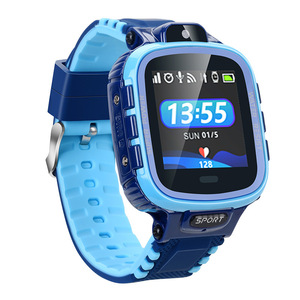
Explore our flagship OEM/ODM smartwatch platforms engineered for precise positioning, biometrics, low-power display performance, and rugged IP68 waterproofing.
A comprehensive examination of why leading consumer electronics brands are transitioning from traditional TFT/LCD to flexible, high-luminance AMOLED panels for next-generation smart wearables.
Unlike traditional TFT displays relying on power-hungry LED backlights, AMOLED pixels emit light individually. This allows pixel-level dimming, achieving true pitch blacks, infinite contrast ratios, and up to 40% reduction in display power consumption during Always-On Display (AOD) standby modes.
Modern China OEM manufacturing facilities leverage Low-Temperature Polycrystalline Oxide (LTPO) backplanes. This enables dynamic display refresh rate switching from 60Hz during active touch interaction down to 1Hz for static watch faces, conserving critical battery mAh capacity.
Using flexible substrate COP (Chip-on-Plastic) packaging technology, Chinese factories drastically minimize display bezel widths down to 1.2mm while reducing total screen stack thickness by 35%, allowing space for larger 700+ mAh battery integration.
China's smart wearable manufacturing ecosystem has evolved far beyond low-cost contract assembly. Today's tier-1 smartwatch factories operate automated Class 10,000 cleanrooms and advanced SMT lines capable of micro-pitch BGA mounting down to 0.35mm pitch.
From initial Industrial Design (ID) and Mechanical Design (MD) to custom PCB layout, RF antenna tuning (4G LTE/eSIM, dual-frequency L1+L5 GPS), and optical bonding, our turnkey OEM/ODM processes guarantee market-ready reliability.
A benchmark evaluation table designed for electronics procurement managers, hardware engineers, and brand owners deciding on display architecture for incoming product lines.
| Evaluation Parameter | Standard TFT-LCD | Rigid AMOLED (Glass Substrate) | Flexible LTPO AMOLED (Polyimide Substrate) |
|---|---|---|---|
| Display Peak Brightness | 400 – 600 nits | 800 – 1000 nits | 1200 – 2000+ nits |
| Contrast Ratio | 1,500 : 1 | 100,000 : 1 | True Infinite (∞ : 1) |
| Power Consumption (AOD Mode) | High (Backlight constantly active) | Medium (Pixel black-out) | Ultra-Low (1Hz Refresh Rate) |
| Screen Panel Thickness | 1.8 mm – 2.4 mm | 1.1 mm – 1.4 mm | 0.5 mm – 0.8 mm |
| Bezel Width Capabilities | 3.0 mm – 4.5 mm | 2.0 mm – 2.8 mm | 1.2 mm – 1.5 mm (Ultra-Slim) |
| Impact Resistance (Drop Test) | Moderate | Moderate (Glass shatter risk) | High (Flexible Plastic Base) |
| B2B Unit Cost Index | Baseline ($) | Moderate ($$) | Premium ($$$) |
Where is the smart wearable supply chain heading? Key innovation vectors shaping Chinese factory capabilities over the next 3 to 5 years.
Traditional physical SIM trays are quickly becoming obsolete due to waterproofing limitations. Next-gen China smartwatches leverage integrated software eSIM chipsets, allowing overseas brands to offer over-the-air (OTA) cellular activation across 160+ international carriers without physical SIM modifications.
The integration of multi-spectral optical sensor arrays (8-channel PPG) combined with AI algorithmic noise reduction enables 24/7 continuous blood oxygen (SpO2), heart rate variability (HRV), cuffless estimated blood pressure monitoring, and advanced sleep architecture tracking with clinical-grade accuracy.
Upcoming EU compliance mandates dictate eco-friendly manufacturing, zero hazardous heavy metals, and modular battery replacements. Chinese factories are pioneering quick-release internal magnetic connectors and recycled chassis alloys to comply with European circular economy laws.
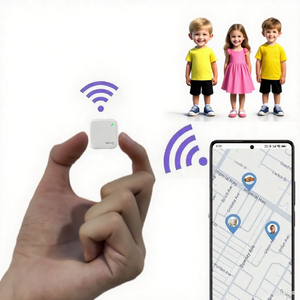
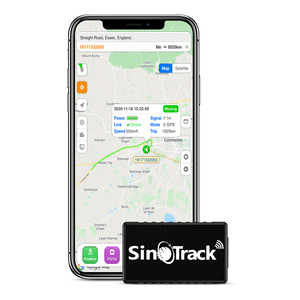
Combining L1 and L5 satellite signal frequencies (GPS, GLONASS, BeiDou, Galileo, QZSS) prevents multi-path signal reflection errors in dense urban environments or dense forests, delivering pinpoint sub-meter tracking accuracy for kids' safety, athletic watches, and asset trackers.
For children and senior care markets, custom Android-based lightweight RTOS platforms are in massive demand. These builds strictly eliminate open web browsers and gaming stores, offering closed-loop communication tools (FaceTalk video calls, group voice chat, geofencing, and SOS alerts).
Transitioning from traditional Li-ion to High-Silicon Anode Li-Polymer chemistry increases battery energy density by 18-22%. This allows 700 mAh batteries to fit inside ultra-compact wristband dimensions while supporting up to 135 hours of standby time.
Avoid quality pitfalls and sample delays by following our rigorous 4-step supplier qualification workflow engineered for global sourcing specialists.
Ensure the manufacturer owns proprietary schematic design files, board support packages (BSP), and software SDKs rather than acting as a third-party trading company re-selling standard turnkey public PCBA solutions.
Confirm that display module assembly takes place in certified dust-free cleanrooms. Inquire specifically about Chip-on-Flex (COF) bonding machines and vacuum OCA lamination capabilities to prevent screen dust or yellow-edge defects.
Request certified test reports covering MIL-STD-810H standards: thermal shock testing (-20°C to 60°C), salt spray corrosion testing for charging pins, abrasion resistance, and IP68 dust/water submersion certificates.
Verify that factory production lines carry active CE, FCC, RoHS, REACH, UN38.3 (battery safety transportation), and MSDS documentation required for seamless customs clearance in North America and the European Union.
As a leading Chinese designer and factory director in the wearable sector, our facility brings together over 15 years of precision electronics engineering, software architecture, and industrial design.
We provide global tech brands, telecommunications operators, and retail distributors with scalable, high-yield production capabilities tailored to strict international benchmarks.
In-depth technical answers addressing common questions from importers, brand managers, and procurement officers.
AMOLED (Active-Matrix Organic Light-Emitting Diode) displays feature self-emissive pixels that require no backlight module. This results in significantly thinner display profiles, true black levels, infinite contrast, and up to 40% lower battery consumption during Always-On Display (AOD) standby modes. Furthermore, AMOLED screens deliver superior outdoor readability under direct sunlight with brightness levels exceeding 1000 nits.
For standard custom logo branding, custom packaging, and custom laser-engraved housings using our existing tooling platforms, the baseline MOQ starts at 500 to 1,000 units. For completely custom ID/MD hardware development (new mold tooling, custom PCB architectural design, and dedicated firmware customization), project MOQs typically start at 3,000 to 5,000 units depending on component specifications.
Our production facility uses a multi-stage waterproofing process. First, display panels are bonded using automated liquid optical clear adhesive (LOCA) or specialized double-sided acrylic seals. Shell joints utilize automated dispense silicone gaskets and ultrasonic welding. Finally, 100% of finished watch housings undergo automated high-pressure air leak testing and hydrostatic chamber submersion to guarantee 1.5-meter (60-minute) IP68 ratings and 50-meter 5ATM water resistance.
Yes. We offer comprehensive software development kits (SDKs) and standardized RESTful APIs for communication protocols. Our software engineering team supports custom Bluetooth LE commands, 4G MQTT network protocols, server URL redirection, and white-label iOS and Android app customization so data flows directly to your brand's dedicated cloud infrastructure.
All our products are manufactured in compliance with international standards. We supply CE, FCC, RoHS, and REACH documentation. For cellular 4G LTE and eSIM models, we assist with PTCRB, GCF, and carrier-specific network approvals. Battery packs are fully certified under UN38.3, MSDS, and IEC 62133 safety regulations for secure global air and sea shipping.
Pre-production golden samples with custom software logos and customized packaging typically require 7 to 12 working days. Full mass production lead times range between 25 and 35 days post-sample approval, depending on component supply chain availability (specifically display driver ICs and cellular module lead times).
Connect directly with our senior engineering and B2B OEM/ODM sales management team. Request technical datasheets, factory audit reports, and competitive price quotes for your project today.
Contact Us