Direct from top-tier Chinese manufacturing facilities. Fully certified (FCC, CE, RoHS, PTCRB) GPS tracking wristbands, smart locator keychains, and high-security offender anklets engineered for global telecom frequency bands.
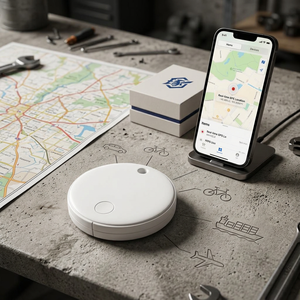
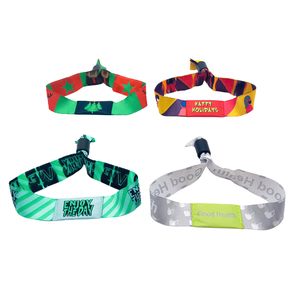
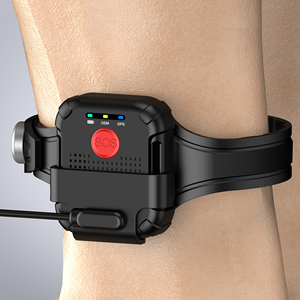
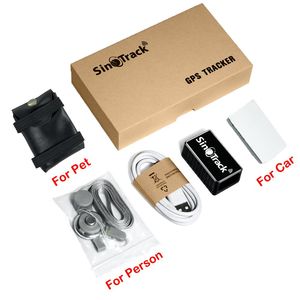
In the rapidly evolving Internet of Things (IoT) hardware ecosystem, selecting a reliable GPS bracelet manufacturer in China requires looking beyond basic component assembly. Leading Chinese OEMs now operate complete vertically integrated ecosystems—combining high-frequency RF engineering, micro-electronic SMT (Surface Mount Technology), custom battery chemistry development, and cloud platform software SDK integration.
Over the past decade, manufacturers have transitioned from manufacturing basic 2G location beacons to producing multi-constellation (GPS, GLONASS, Galileo, BeiDou, QZSS) 4G LTE Cat-M1/NB-IoT and 4G VoLTE wearable devices. By utilizing advanced antenna architecture such as SignalBooster 2.0™, Chinese exporters provide enterprise buyers with unmatched signal sensitivity, enabling reliable tracking in urban canyons, dense indoor environments, and remote geographic areas across North America, Europe, and the APAC region.
Engineered with dual-injection molded TPU, hermetically sealed acoustic membranes, and magnetic pogo-pin dock interfaces. Devices survive rigorous submersion tests (1.5 meters for 60 minutes) and harsh chemical exposures.
Streamline global deployment with pre-integrated eSIM chipsets (MFF2). Supports OTA (Over-The-Air) carrier profile switching, eliminating physical SIM card trays and enhancing water resistance.
Complete hardware-to-cloud security architecture. Proprietary iOS/Android parent application control paired with T-Cloud™ enterprise RESTful APIs and MQTT protocol streaming for custom dashboard integration.
Key technological shifts enterprise buyers must consider when negotiating OEM contracts and finalizing long-term product roadmaps with Chinese suppliers.
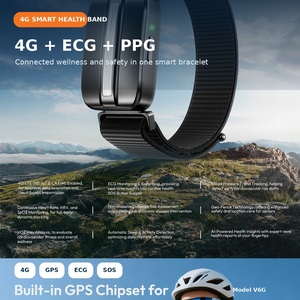
Modern procurement requests are shifting away from basic GPS tracking toward integrated bio-telemetry. Procurement teams in the senior care, healthcare, and insurance sectors are requesting GPS bracelets integrated with PPG (photoplethysmography) and ECG (electrocardiogram) chips. By combining PPG heart rate sensors, SpO2 oxygen saturation monitoring, continuous skin temperature tracking, and tri-axis accelerometer fall-detection with real-time location logging, single-purpose tracking bands are evolving into preventive care IoT nodes.
Government agencies and corrections departments represent a rapidly growing market for high-margin GPS bracelets. Procurement trends in this niche demand fiber-optic optical anti-tamper straps, mechanical key-lock closures, dual-sim redundant cell connectivity, and IP69K high-pressure washdown ratings. Chinese factories are now producing judicial-grade anklets with multi-day 700mAh to 1200mAh internal batteries capable of surviving active RF jamming attempts.
Battery degradation and frequent recharging remain the primary causes of customer churn in consumer GPS wearables. Next-generation Chinese manufacturing incorporates ultra-low power GNSS chipsets (such as Sony CXD5605 or MediaTek MT2503 family updates) coupled with Edge-AI motion classification. The device stays in deep sleep when stationary and automatically triggers GPS positioning only upon detecting sustained acceleration, extending battery life from 24 hours to over 135 hours of standby on a single charge.
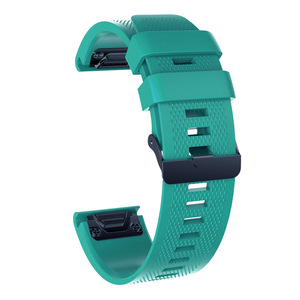
To reduce client NRE (Non-Recurring Engineering) costs and accelerate time-to-market, leading exporters now supply modular housing platforms. Clients can select standardized core PCBA boards and customize exterior wristband materials (medical silicone, stretch-fit fabric, premium leather, or anti-cut stainless steel mesh) and colorways without funding full mold tooling from scratch.
Evaluate hardware specifications across major product categories to match target user demographics and regional regulatory standards.
| Product Category | Primary Positioning Technologies | Battery Capacity & Life | Ingress Rating | Target Certifications | Key OEM Customization Features |
|---|---|---|---|---|---|
| Kids GPS Smartwatch / Bracelet | GPS + AGPS + Wi-Fi + LBS | 700 mAh (~48 hrs active) | IP68 Waterproof | FCC, CE, RED, SAR, ROHS | Classroom focus mode, 5MP FaceTalk camera, approved contact whitelist |
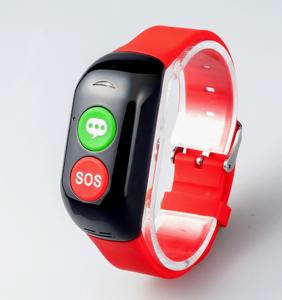
| Senior Telehealth GPS Band | GPS + Wi-Fi + BLE 5.0 + PPG | 600 mAh (~36-48 hrs) | IP67 / IP68 | CE-RED, FDA-compliant sensors | ECG/PPG health reporting, one-touch SOS emergency button, fall detection alarm |
| Judicial / Offender Tracker Anklet | L1+L5 Dual-Band GNSS + 4G LTE | 1000 - 1500 mAh (Up to 7 days) | IP69K High-Pressure | Government / Law Enforcement standard | Fiber-optic optical tamper band, RF jamming alarm, mechanical key lock |
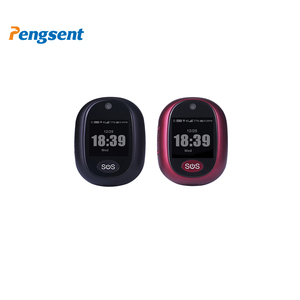
| Smart Tag / Pet GPS Locator | BLE 5.2 + Apple Find My / GPS | CR2032 or 220 mAh Li-Po | IP67 Waterproof | FCC, CE, Telec | Compact lightweight housing, custom keychains, custom laser etching |
| Event & Festival RFID/GPS Band | Passive RFID / Active NFC + BLE | Passive / 100 mAh micro battery | IP65 Splashproof | CE, ISO 14443A | Custom dye-sublimation woven polyester strap, cashless payment chip |
Critical technical and business considerations addressed by experienced Chinese wearable manufacturing directors.
For standard off-the-shelf catalog models with custom logo branding and customized packaging, MOQs generally start at 500 to 1,000 units. For full ODM projects requiring custom industrial plastic injection molds, proprietary PCBA layout modifications, or custom cellular antenna tuning, initial production runs typically require an MOQ of 3,000 to 5,000 units to offset tooling and NRE costs.
Professional GPS bracelet exporters manufacture specific regional PCBA variants using modular modem chipsets (e.g., Quectel, SIMCom, Fibocom). For North America, hardware is built with B2/B4/B12/B13/B66 bands certified for AT&T and T-Mobile. For Europe and APAC, configurations focus on B1/B3/B7/B8/B20 bands. Dual-band or global 4G LTE Cat-M1/NB-IoT modems are also offered for seamless international roaming across 160+ countries.
Yes. Reputable manufacturers provide comprehensive API/SDK support. Hardware can be configured to push data packets via raw TCP, UDP, HTTP, or MQTT protocols directly to your IP address or cloud endpoint (AWS, Azure, Google Cloud). Full communication protocol documentation, data parsing code samples (C#, Java, Python, Node.js), and mobile app SDKs for iOS and Android are provided during engineering integration.
Buyers should insist on factories operating under ISO9001 quality management systems. Request certified third-party lab test reports (such as SGS, TUV, or Intertek) verifying IP68 ingress protection (submersion at 1.5m for 60 mins), IP69K thermal washdown (for judicial devices), CE-RED compliance, FCC ID certification, RoHS hazardous substance compliance, and UN38.3 lithium battery transport safety verification.
For ready-made tooling with custom firmware/software setup, lead times range from 2 to 4 weeks. For complete ODM custom projects (ID design -> 3D prototype printing -> tooling development -> SMT trial run -> carrier certification -> mass production), the standard cycle takes between 3 to 5 months depending on certification requirements.
Leading manufacturers utilize high-energy-density pure cobalt Lithium-ion Polymer (Li-Po) cell chemistries rated for 500+ charge cycles retaining >80% capacity. Integrated power management ICs (PMICs) prevent overcharging, over-discharging, and short circuits, while smart firmware regulates sleep states based on built-in G-sensor activity logging.
Connect directly with our senior hardware engineers and international supply chain directors. Request detailed engineering datasheets, factory compliance audits, firmware API specifications, and competitive B2B volume pricing.