Directly engineered from Shenzhen and Dongguan manufacturing hubs. Explore high-precision personal safety wearables, child smartwatches, micro asset locators, and industrial trackers optimized for global cellular networks.
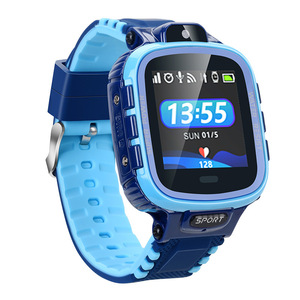
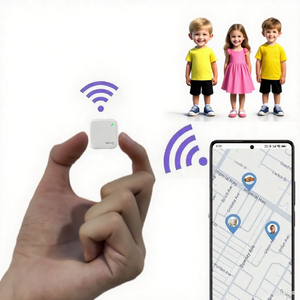
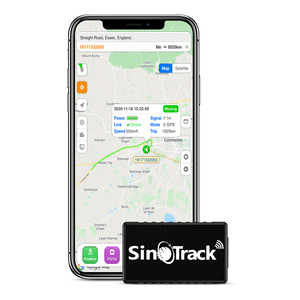
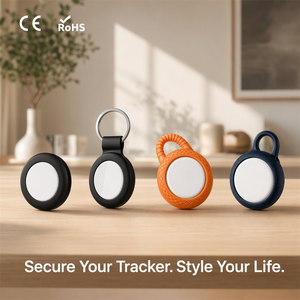
The global demand for personal tracking wearables—encompassing children’s cellular phone watches, senior healthcare monitors, micro personal safety locators, and specialized asset management devices—has experienced a structural shift toward high-precision multi-constellation hardware. China, anchored by the electronics manufacturing powerhouse hubs of Shenzhen, Dongguan, and Huizhou, produces over 85% of the world’s GPS-enabled smartwatch devices. For global procurement officers, brand owners, telecommunications operators, and enterprise hardware importers, selecting the ideal China GPS watch factory and exporter requires analyzing far more than unit prices; it demands a deep evaluation of chipset architecture, RF antenna calibration, power management IC (PMIC) efficiency, cellular carrier certifications, and firmware data privacy compliance.
Modern smartwatches have transitioned from basic 2G/3G GSM locator pendants into sophisticated 4G LTE Cat-1 and 5G NR low-power edge computing systems. Leading manufacturing facilities integrate automated Surface Mount Technology (SMT) lines with high-frequency RF anechoic testing chambers, ensuring optimal carrier network reception across North American, European, Latin American, and Asia-Pacific bands. This comprehensive B2B sourcing whitepaper outlines the essential technological architectures, future procurement trends, quality assurance protocols, and manufacturing standards governing the top-tier Chinese GPS smartwatch exporters.
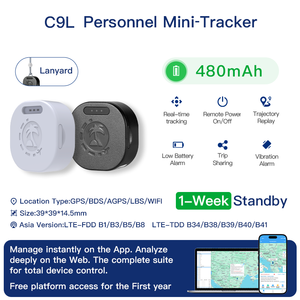
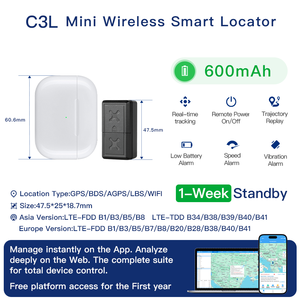
Top factories integrate hybrid GNSS receivers utilizing GPS (US), GLONASS (RU), BeiDou-3 (CN), and Galileo (EU) alongside A-GPS, LBS cellular tower triangulation, and Wi-Fi SSID location sniffing for pin-point accuracy indoor and outdoor.
Export-grade manufacturers strictly adhere to GDPR, COPPA, and CCPA guidelines. Security protocols include encrypted TLS/SSL socket transmissions, tokenized cloud API authorization, and secure FOTA updates without backdoor vulnerabilities.
Full turnkey manufacturing service offering specialized PCBA layout design, custom injection mold development, white-label Android/RTOS firmware compilation, customized packaging, and dedicated carrier eSIM profiles.
As telecommunications operators across the globe phase out legacy 2G and 3G infrastructure, the enterprise procurement strategy for personal locators has drastically pivoted. When evaluating supply partners in China, buyers must align with factories actively investing in next-generation wearable technologies:
Standard high-speed 4G LTE modules introduce unnecessary power drain and component bulk for wearables. Premier Chinese exporters have transitioned to 4G LTE Cat-1 (Category 1 Bis) chipsets (such as Unisoc 8910DM or ASR3603) and integrated eSIM (Embedded SIM) designs. This slashes PCBA footprint by up to 30%, eliminates physical SIM card tray leak points for enhanced IP68 water ingress protection, and significantly lowers monthly cellular data power consumption.
Standby endurance remains a primary consumer pain point. Premium manufacturers are abandoning standard lithium-ion pouches in favor of high-energy-density Lithium-Cobalt Oxide (LiCoO2) and solid-state polymer formulations. Coupled with dynamic sleep-mode algorithms—where the GNSS module only fires during active telemetry polling or motion sensor activation via 6-axis accelerometers—modern smartwatches achieve up to 135 hours of standby on a compact 700mAh cell.
Next-generation firmware developed by top-tier Chinese ODM factories incorporates lightweight on-device machine learning. Smartwatches establish baseline routine paths (e.g., daily school commutes or elder walking routes). If the wearer deviates from normal velocity vectors or leaves predefined geofences, the system triggers predictive SOS warnings to cloud servers long before traditional static geofences react.
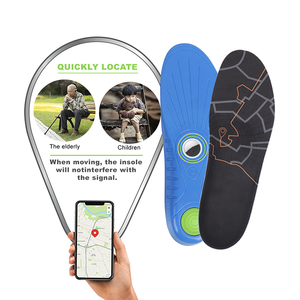
Personal safety wearables have expanded beyond basic tracking. Leading B2B factories now embed low-power PPG optical heart-rate and SpO2 sensors, body temperature thermistors, skin-contact wear detection sensors, and fall-detection algorithms calibrated via MEMS gyroscopes. This makes modern China-sourced GPS watches ideal for both child safety and elderly telecare solution providers.
Evaluating component specifications is crucial for procurement managers during factory auditing. Below is a structural technical breakdown comparing standard off-the-shelf consumer trackers against high-reliability enterprise/industrial grade wearables produced by top Chinese exporters.
| Hardware Specification | Standard Consumer Grade | Premium Enterprise / OEM Grade | Sourcing Advantage |
|---|---|---|---|
| Positioning Architecture | Single GPS + LBS | GPS + GLONASS + BeiDou + Wi-Fi + AGPS | Sub-3 Meter Accuracy |
| Cellular Chipset | 2G GSM / 4G Standard | 4G LTE Cat-1 Bis / Cat-M1 Low-Power | Lower Power & Extended Bands |
| Enclosure Protection | IP65 Splash Resistant | IP68 Waterproof (1.5m / 60 Min Submersion) | Ultrasonic Weld Seals |
| Battery Technology | Standard Li-Polymer (400-500mAh) | High-Density Pure Cobalt (700mAh+) | +45% Extended Runtime |
| Firmware & OS | Fixed Closed Microcode | RTOS / Android with FOTA & Open API/SDK | Full Cloud Customization |
| Global Compliance | Basic CE / RoHS | CE, FCC, RoHS, REACH, PTCRB, AT&T/T-Mobile pre-certified | Seamless Customs Clearance |
Establishing a direct manufacturing relationship with a qualified Chinese GPS watch factory offers distinct competitive advantages for international brands:
Essential technical and commercial answers for hardware importers, brand managers, and sourcing executives.
Connect directly with our engineering team for factory pricing, PCBA specifications, custom mold customization, and global carrier compatibility compliance reports.