Engineered Glass Product Portfolio
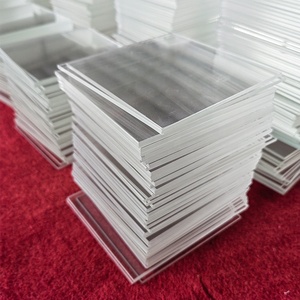
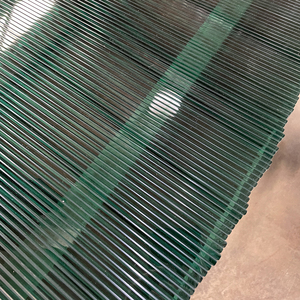
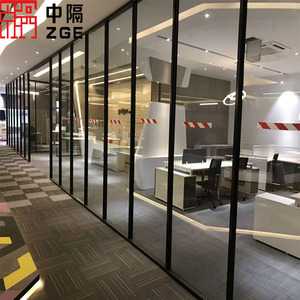
Explore our export-grade tempered, heat-strengthened, and specialized glass panels built for architectural facades, structural glazing, and high-temperature industrial environments.
Precision Forced-Convection Tempering
Our state-of-the-art NorthGlass and LandGlass convection furnaces process low-emissivity (Low-E) glass without roller wave distortion, ensuring optical clarity exceeding ISO 9050 standards.
Heat Soak Testing (HST) Guarantee
To prevent catastrophic spontaneous breakage from Nickel Sulfide (NiS) inclusions, 100% of structural panels undergo DIN EN 14179-1 heat soak thermal cycling prior to crating.
CNC Edging & Deep Fabrication
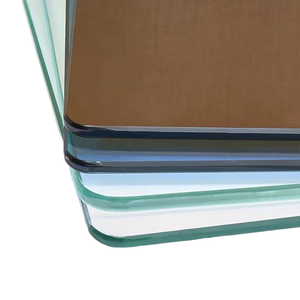
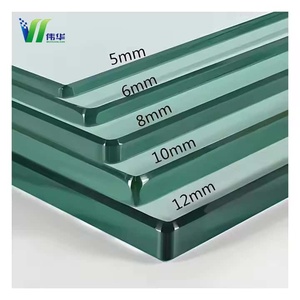
From fine flat polished edges and arrising to complex waterjet cutouts and countersunk drilling, our automated Italian Intermac CNC centers achieve ±0.5mm tolerances.
Strategic Sourcing Analysis: Sourcing Tempered Glass from China
The global demand for high-performance safety glass continues to accelerate across commercial real estate, solar infrastructure, and consumer appliance sectors. As architectural codes demand lower solar heat gain coefficients (SHGC) and higher U-values, China's glass manufacturing ecosystem has transitioned from high-volume commodity production to high-precision engineering fabrication. This whitepaper provides procurement executives, facade engineers, and B2B buyers with an actionable roadmap for negotiating specs, evaluating supplier capabilities, and mitigating logistical risks.
1. The Physics of Tempering and Materials Selection
Glass tempering is a precisely controlled thermal treatment process. Annealed float glass is heated to approximately 620°C to 680°C within a furnace, bringing it close to its softening point. It is then rapidly cooled (quenched) by high-pressure air blasts. This creates a state of balance where the exterior surfaces are locked in high compressive stress while the core core remains in tensile tension.
- Soda-Lime vs. Borosilicate 3.3: Standard architectural applications utilize soda-lime-silicate float glass. However, for industrial sight glasses, oven doors, and high-heat environments, Borosilicate 3.3 is selected due to its extremely low coefficient of thermal expansion (3.3 × 10⁻⁶ K-1), making it virtually immune to thermal shock up to 500°C.
- Optical Anisotropy & Strain Patterns: Advanced processing facilities utilize digital polariscopes to monitor quench uniformity, reducing visible "leopard spots" or strain patterns (anisotropy) under polarized daylight conditions.
2. Future Procurement Trends in Global Architectural Glass (2025–2030)
As international sustainability mandates such as the EU Energy Performance of Buildings Directive (EPBD) take full effect, B2B procurement strategies are shifting from basic unit cost metrics toward total life-cycle performance and carbon footprint evaluation:
- Ultra-Thin Tempered Glass (2mm to 3mm): Driven by triple-glazed unit weight restrictions, factories are adopting ultra-thin tempering lines that allow 2.8mm tempered panes to be integrated into light double and triple IGUs without structural deflection.
- BIPV (Building-Integrated Photovoltaics): Tempered front-glass panels featuring anti-reflective (AR) nano-coatings and high light transmittance (≥94%) are replacing traditional cladding, turning building facades into power generators.
- Decarbonized Glass Manufacturing: Top Tier-1 Chinese factories are transitioning float tanks from heavy fuel oil to green hydrogen-natural gas blends and electric boosting furnaces to drastically reduce Scope 1 and Scope 2 embedded carbon emissions per square meter.
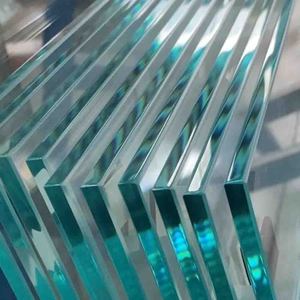
- Low-Iron Substrates Dominance: High-end commercial developments are increasingly specifying low-iron (extra clear) float glass with ferric oxide content below 0.015%. This eliminates the green edge tint characteristic of standard float glass, achieving true color rendition.
3. Supply Chain Risk Mitigation & Quality Control Standard Operating Procedures
Overseas buyers sourcing custom glass panels must establish robust quality assurance protocols to prevent transit damage, dimensional mismatches, and structural compliance failures:
- Edge Finishing Quality: Unprocessed cut edges create thermal stress concentration points. For all toughened glass, flat polished edges with arris or pencil edges are mandatory to prevent premature thermal stress fracturing inside the furnace.
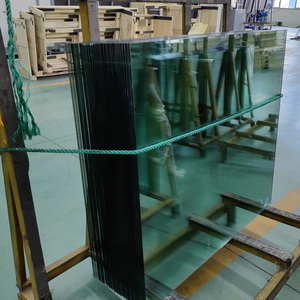
- Export Packaging Standards: Ocean transportation subjects crates to high humidity and dynamic shock load forces. Require your supplier to use solid wooden A-frames or closed plywood end-cap crates, treated under ISPM-15 heat treatment standards, combined with mildew-proof powder or paper interleaving between each pane.
What is the difference between Tempered Glass and Heat-Strengthened Glass?
+
Tempered glass is rapidly quenched to achieve high surface compression (≥ 69 MPa / 10,000 psi), making it 4 to 5 times stronger than annealed glass. When broken, it fragments into small safe dice-like particles. Heat-strengthened glass is cooled much slower, resulting in surface stress between 24 and 52 MPa (3,500 to 7,500 psi). It is twice as strong as annealed glass and breaks into larger shards that tend to remain in the frame, making it ideal for overhead spandrel applications where fallout prevention is vital.
Why is Heat Soak Testing (HST) recommended for structural glass panels?
+
Raw float glass can contain microscopic trace inclusions of Nickel Sulfide (NiS). Over time, these inclusions can undergo a phase transformation, expanding in volume and causing sudden spontaneous breakage in fully tempered glass without any external mechanical load. Heat Soak Testing (HST) involves heating the tempered glass to 290°C in a controlled oven for several hours according to EN 14179-1. This forces any contaminated panels to break inside the factory rather than on the job site.
Can tempered glass panels be cut or drilled after the tempering process?
+
No. Absolutely no cutting, drilling, edgework, or surface etching can be performed on glass once it has undergone the tempering process. Any attempt to modify the surface will disturb the high internal tension equilibrium, causing the panel to instantly shatter into small fragments. All fabrication, CNC cutouts, notchings, and holes must be completed before the glass enters the tempering furnace.
What international quality standards do your factory products meet?
+
Our production lines adhere to stringent global standards, including ISO 9001 quality management, European Union EN 12150-1 (for toughened safety glass) and EN 14179 (HST), North American SGCC (Safety Glazing Certification Council) under ANSI Z97.1-2015 / CPSC 16 CFR 1201, Australian standard AS/NZS 2208, and mandatory Chinese CCC certification.
How do you manage lead times and custom container loading for overseas shipments?
+
Standard fabrication lead time is typically 12 to 18 business days depending on order complexity (such as double IGU or SGP laminated combinations). Cargo loading is optimized using 20GP or 40HQ open-top or standard containers with custom-built heavy-duty wooden A-frame crates. Steel strapping, corner protectors, and moisture-absorbing desiccant packs ensure 0% breakage during ocean transit.