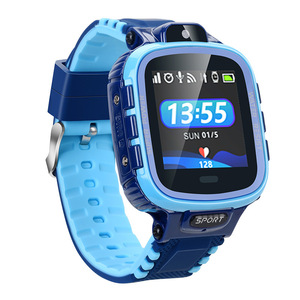
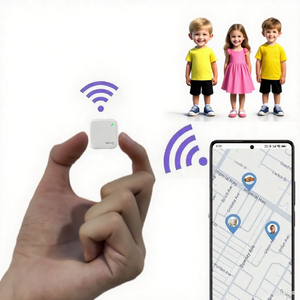
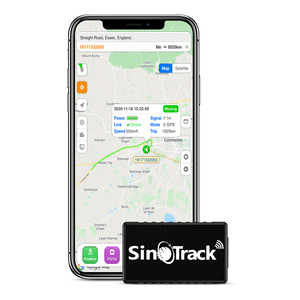
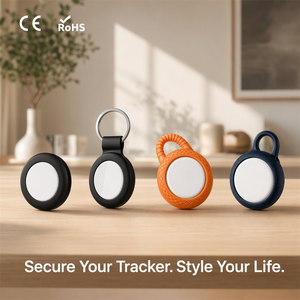
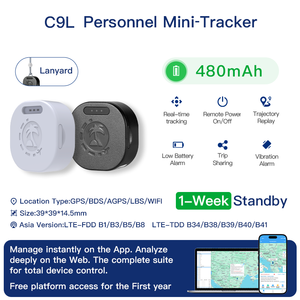
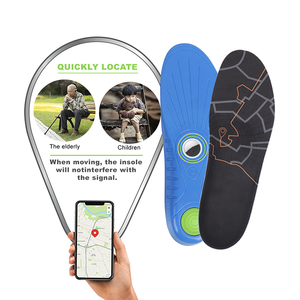
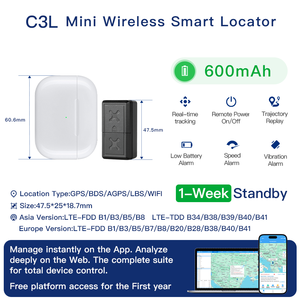
Enterprise-grade hardware configurations engineered for wholesale procurement, institutional deployments, white-label telematics, and tailored IoT ecosystems.
Understanding the hardware, firmware, and compliance matrix required to deliver high-yield wearable electronics for global brands, telecommunications operators, and enterprise fleets.
Our industrial engineering teams provide complete structural casing design, RF 3D antenna modeling, PCB micro-miniaturization, and ergonomic silicone/TPU strap tooling to ensure mechanical resilience and comfort.
We leverage industry-leading silicon architectures—including Qualcomm Wear platforms, Unisoc 4G LTE chipsets, and low-power Nordic/MediaTek SoCs—paired with custom RTOS or stripped Android OS builds for optimal battery conservation.
Every chassis undergoes rigorous pressure testing. Utilizing precise sonic welding and dual-injection silicone gaskets, our devices sustain continuous immersion up to 1.5 meters for 60 minutes.
A technical examination of the core architectural shifts shaping next-generation smartwearable procurement, from biometric array miniaturization to eSIM connectivity.
Legacy 2G and 3G cellular networks have sunset globally. Modern enterprise smartwatches now standardly integrate 4G LTE Cat-1 bis and embedded eSIM (eUICC) modules. This eliminates physical SIM trays, enhances structural water isolation, and enables seamless dynamic profile provisioning for international roaming across 160+ carrier networks.
Procurement demands have transitioned from simple step-counting to sophisticated medical-grade telemetrics. Modern OEM platforms feature multi-wavelength Photoplethysmography (PPG) arrays capable of tracking continuous SpO2, heart rate variability (HRV), skin temperature, and cuffless blood pressure trends, backed by local low-power Machine Learning algorithms for instant fall detection.
Power Management ICs (PMICs) paired with custom high-density Silicon-Anode or Lithium Cobalt Oxide (LiCoO2) battery cells enable ultra-slim profiles without sacrificing operational longevity. Combined with magnetic pin docks (e.g., Power Base architectures), modern devices achieve up to 135 hours of standby time while supporting high-drain LTE video calling.
Use this hardware reference matrix to evaluate custom OEM specifications against enterprise operational requirements.
| Hardware Subsystem | Standard Component Spec | Enterprise Customization Options | Performance Impact |
|---|---|---|---|
| Main Application Processor | Unisoc W307 / MediaTek MT6739 / Nordic nRF5340 | Qualcomm Wear 4100+ / Custom Dual-Core RTOS MCU | Determines OS fluidness, battery draw, and video streaming capabilities. |
| Cellular Connectivity | 4G LTE Cat-1 bis, Multi-Band GSM Fallback | eSIM (eUICC) chip-on-board or Nano-SIM tray configuration | Enables untethered voice, SMS, real-time telemetry, and global connectivity. |
| Location & Positioning Engine | GNSS (GPS + GLONASS + BDS) + Wi-Fi Triangulation + LBS | SmartPin™ indoor beacon positioning & AGPS acceleration | Delivers sub-5-meter outdoor location accuracy and power-optimized indoor tracking. |
| Display Panel Tech | 1.6" AMOLED Touchscreen (320x360 resolution, 450 nits) | Memory-In-Pixel (MIP) sunlight-readable displays / Shatter-resistant glass | Directly impacts sunlight visibility, structural drop safety, and active screen runtime. |
| Biometric Sensor Suite | Single-Green PPG Heart Rate Sensor + 3-Axis Accelerometer | 8-Channel Multi-Spectral PPG (SpO2, ECG, Temp) + 6-Axis Gyroscope | Supports institutional health monitoring, fall detection, and sleep staging algorithms. |
| Enclosure & Ingress Protection | Impact-Resistant ABS/PC Shell with TPU Straps | IP68 / 5ATM Waterproof, Medical-grade Hypoallergenic Silicone | Prevents fluid penetration during swimming, showering, or high-dust industrial environments. |
Key market vectors driving B2B contract electronics manufacturing and how bulk buyers can align supply chain strategies for maximum competitive advantage.
OEM factories are increasingly adopting standardized interior chassis frames that allow brands to swap display modules, battery capacities, and sensor boards without incurring re-tooling NRE costs for outer plastic/metal molds.
In modern telematics and wearable tracking, cloud backend security is as critical as physical hardware. Enterprises demand end-to-end encrypted protocol pipelines (AES-256) connecting hardware endpoints to secure cloud environments (such as T-Cloud™) hosted locally within domestic regional jurisdictions.
Bulk buyers now prioritize hardware vendors capable of providing full SDKs, RESTful API endpoints, and turn-key companion applications (iOS / Android) that can be re-skinned with custom enterprise branding, administrative role controls, and geo-fencing dashboards.
Our standardized four-phase engineering verification cycle ensures zero-defect mass production yields for global bulk hardware shipments.
Industrial structural modeling, rapid 3D SLA prototyping, initial PCB layout validation, and preliminary Engineering Verification Testing (EVT).
Design Verification Testing (DVT): IP68 pressure chamber immersion, MIL-STD-810H drop testing, thermal shock, and SMT circuit yield tuning.
Production Verification Testing (PVT) on live assembly lines. Final submission for global carrier PTCRB, FCC, CE, RoHS, and UN38.3 certifications.
High-speed automated SMT placement, 100% Automated Optical Inspection (AOI), laser marking, custom packaging, and global logistics dispatch.
Detailed technical and operational answers to help supply chain managers, product leads, and procurement directors make informed factory selections.
Our standard MOQ for stock white-label hardware with custom logo laser engraving and packaging is 500 units. For custom casing color matching, bespoke silicone strap tooling, or unique PCBA component layouts, the standard initial manufacturing run threshold is 1,000 to 3,000 units depending on the complexity of the internal System-on-Chip (SoC) architecture.
Yes. We provide full firmware-level customization. This includes custom bootloader graphics, default application pre-installations, user interface skinning, feature-lock modes (e.g., removing open browsers or games for dedicated enterprise focus), and custom API communication layer integrations that allow smartwatches to transmit telemetry directly to your private enterprise servers.
Every single casing that exits our SMT assembly line passes through a automated positive and negative pressure air-decay leakage testing chamber. Devices selected for spot testing undergo immersion testing in 1.5-meter liquid water columns for 60 minutes, ensuring strict compliance with IP68 and 5ATM ingress protection standards before final pack-out.
Our standard smartwatch products carry full global compliance credentials including FCC (US), CE (Europe), RoHS, REACH, and UN38.3 battery transport safety documentation. For cellular 4G LTE and eSIM models, carrier-level network approvals such as PTCRB and GCF certification documentation can be provided to support rapid network onboarding.
For existing standard hardware platforms requiring custom branding, production lead times average 15 to 25 business days. For full ODM hardware projects requiring new plastic injection molds, tooling cutouts, and custom PCB engineering, total development timelines range from 60 to 90 days through the full EVT/DVT/PVT qualification pipeline.
Leverage our 10+ years of hardware engineering expertise, enterprise-grade cloud backends, and certified production lines. Request custom factory quotations, component datasheets, and engineering samples today.