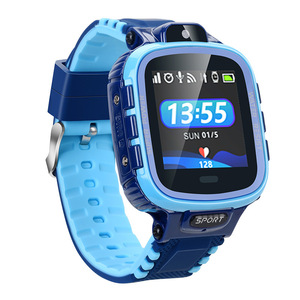
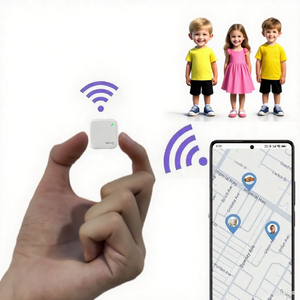
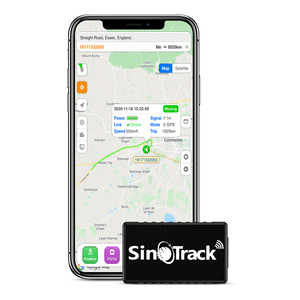
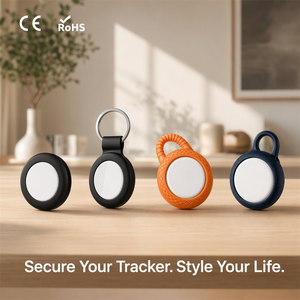
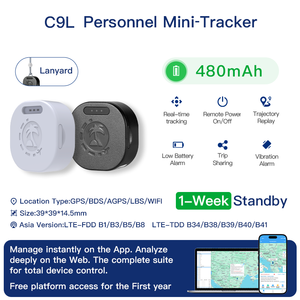
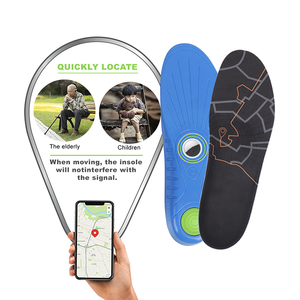
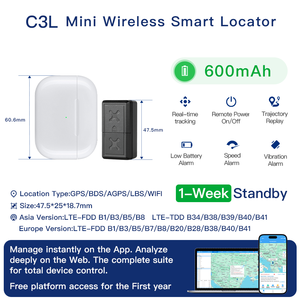
Explore our baseline hardware platforms fully customizable across PCBA, firmware stack, industrial design, enclosure molds, and white-label cloud service integration.
Combining decade-long specialized wearable engineering, vertical integration across SMT manufacturing, RF optimization, and carrier-grade cloud platforms.
Full-stack PCBA design based on ultra-low-power Qualcomm, MediaTek, and UNISOC cellular chipsets tailored for micro form-factors.
Military-grade structural engineering designed for active children, sports enthusiasts, and demanding industrial IoT environments.
Integrated electronic SIM technology paired with proprietary cellular antenna tuning to guarantee signal coverage in low-reception areas.
Comprehensive white-label companion mobile applications (iOS/Android) and enterprise SaaS management console backed by T-Cloud infrastructure.
Advanced positioning algorithms seamlessly fusing GPS, GLONASS, Galileo, Wi-Fi fingerprinting, and cellular LBS for pinpoint indoor/outdoor accuracy.
Medical-grade PPG sensor arrays calibrated with custom edge AI algorithms for real-time heart rate, SpO2, and continuous activity monitoring.
The global wearable device ecosystem is experiencing a structural transition. No longer restricted to simple step counting or tethered Bluetooth accessories, modern smartwatches have emerged as standalone, cloud-connected micro-computing nodes. Driven by advances in system-on-chip (SoC) integration, embedded SIM (eSIM) standardization, edge artificial intelligence, and sophisticated bio-sensing optics, B2B procurement teams must now evaluate custom OEM manufacturers through a holistic lens encompassing hardware miniaturization, firmware security, carrier compliance, and lifecycle cloud support.
Successful smartwatch OEM deployment requires balancing active cellular power dissipation with thermal management in ultra-compact enclosures. Selecting an OEM manufacturer with proprietary RF antenna tuning and customized RTOS/Android micro-kernels reduces time-to-market by up to 65% while eliminating costly carrier recertifications.
Modern custom smartwatch OEM design centers around maximizing internal volume efficiency. As consumers and enterprise users demand sleeker form factors alongside larger battery capacities (ranging from 450 mAh to 700+ mAh), hardware engineers face immense spatial constraints. Key architectural trends include:
As smartwatches expand into remote patient monitoring (RPM), eldercare anti-loss, and wellness verticals, bio-sensor accuracy serves as a critical differentiator. Custom ODM manufacturers are moving beyond basic photoplethysmography (PPG) toward multi-wavelength optoelectronic arrays.
Our engineering team integrates dual-LED and quad-photodiode sensor modules operating alongside 6-axis inertial measurement units (IMU). Advanced digital signal processing (DSP) filters out motion artifacts during intensive exercise or tremors, enabling accurate measurements of continuous PPG heart rate, blood oxygen saturation (SpO2), stress indexes, and surface skin temperature variations.
Physical nano-SIM trays represent a primary failure point in waterproof wearables—introducing water ingress pathways and adding structural bulk. The industry benchmark for custom OEM smartwatches has shifted decisively toward onboard eSIM (MFF2 architecture).
By soldering the secure element directly onto the main PCBA during SMT assembly, devices achieve absolute IP68 water resistance while supporting remote SIM provisioning (RSP) via GSMA-compliant platforms. This enables seamless carrier profile switching across 160+ countries without physical hardware modifications.
Hardware without optimized firmware leads to poor user experiences and shortened product lifecycles. Custom smartwatch manufacturing requires modular software architecture:
Navigating the global electronics supply chain demands strategic foresight. Enterprise buyers, telecoms, and brand owners are shifting away from off-the-shelf white-label products toward co-developed modular platforms. Understanding these emerging procurement trends is essential for maintaining brand equity and operational margin resilience.
Buyers now favor OEM vendors offering pre-certified baseboard architectures. By utilizing verified core PCBA platforms, brands can customize exterior industrial design, CMF (Color, Material, Finish), and software features while skipping 9 months of foundational hardware debugging.
Submitting unverified wearable wireless products to certification bodies often leads to costly RF emission failures. Procurement strategies increasingly mandate that OEM suppliers provide pre-tested modules holding CE, FCC, RoHS, REACH, and PTCRB carrier approvals.
Sourcing hardware alone is no longer sufficient. Enterprise procurement contracts now incorporate SaaS software level agreements (SLAs), custom mobile app publishing rights, private AWS/Azure server deployment, and continuous firmware OTA maintenance.
Compare our tiered manufacturing engagement models to align with your project scope, capital expenditure budget, and target launch timeline.
| Engineering Criteria | White-Label Turnkey OEM | Custom Platform OEM | Full-Custom ODM (Bespoke) |
|---|---|---|---|
| Target Audience | Fast-to-market brands, regional telecom bundlers | Established wearable brands, niche IoT operators | Enterprise tech leaders, medical tech firms |
| Industrial Design (ID) & CMF | Existing housing molds, custom logos & colors | Modified existing tooling, unique strap/bezel design | 100% proprietary custom structural & tooling molds |
| PCBA & Chipset Choice | Pre-configured Qualcomm / UNISOC platform | Customized PCBA component layout & sensor stack | Bespoke circuit schematic, custom SiP chip specification |
| Firmware & App Customization | Brand UI skinning, pre-installed client apps | Custom OS features, proprietary API/SDK hooks | Bespoke microkernel, custom cloud infrastructure |
| IPX Rating & Waterproofing | IP67 to IP68 (Standard baseline) | IP68 (1.5m / 60 min tested) | Custom 5ATM / 10ATM pressure rating engineering |
| Estimated Time-to-Market | 3 to 6 Weeks | 12 to 16 Weeks | 24 to 36 Weeks |
| Typical Minimum Order Quantity (MOQ) | 1,000 Units | 3,000 – 5,000 Units | 10,000+ Units |
Technical, regulatory, and supply chain insights curated for hardware product managers and procurement leads.
Our manufacturing facilities combine over 10 years of direct wearable R&D experience, housing cleanroom SMT assembly lines, automated optical inspection (AOI), dedicated RF anechoic testing chambers, and full-spectrum water-pressure testing setups. We specialize in sub-miniature multi-layer PCBA designs, integrated eSIM architecture, custom IP68 injection molding, and optimized Android/RTOS firmware development.
Yes. We provide end-to-end software customization. On the device level, we can customize boot animations, UI themes, widget layouts, and pre-load custom applications. On the cloud side, we deliver white-label companion apps for iOS and Android under your brand's developer accounts, alongside RESTful APIs for integrating location and telemetry data into your proprietary servers.
Waterproofing is built into structural design through double-injection molding, silicone gasketing, waterproof acoustic membranes (Gore-tex grade), and specialized structural adhesives. During mass assembly, 100% of manufactured smartwatch casings undergo automated dual-stage testing: negative-pressure air-vacuum testing followed by submersion testing rated to 1.5 meters for 60 minutes.
Our hardware platforms are engineered to meet global telecom standards, utilizing pre-certified LTE Cat-1 and Cat-4 modules compliant with FCC (North America), CE/RED (Europe), RoHS, REACH, and PTCRB standards. Our devices operate seamlessly on major networks including AT&T, T-Mobile, Vodafone, and regional MVNO carriers.
For white-label platforms with logo and software branding, our baseline MOQ starts at 1,000 units with a 3 to 4 week turnaround. For custom hardware modifications, unique housing colorways, or bespoke PCB configurations, typical MOQs range from 3,000 to 5,000 units with a production lead time of 12 to 16 weeks including pilot runs and testing.
Absolutely. We understand the regulatory necessity of compliance with GDPR, COPPA, and local data sovereignty laws. We offer complete server software deployment packages allowing you to host the backend database, user auth modules, and location microservices directly on your private AWS, Google Cloud, Azure, or self-hosted enterprise infrastructure.