
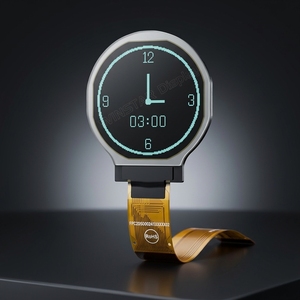
1.18" Round AMOLED Display Panel 128x128 SPI/I2C Small OLED (SSD1327)
- Technology: Round AMOLED / PMOLED
- Resolution: 128 x 128 Dots
- Driver IC: SSD1327 / SPI & I2C
- Key Feature: Ultra-thin, High Contrast
Explore our industrial-grade, low-power AMOLED, TFT LCD, and PMOLED display panels optimized for smart wearables, sports watches, healthcare devices, and children's GPS trackers.
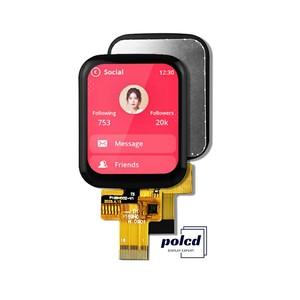
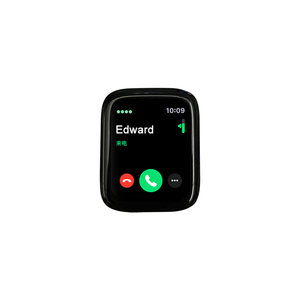
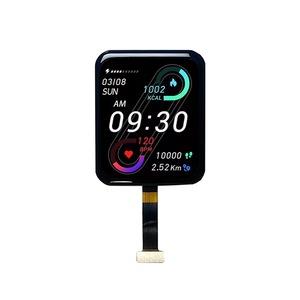
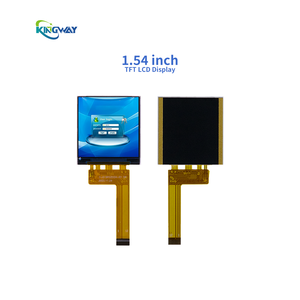
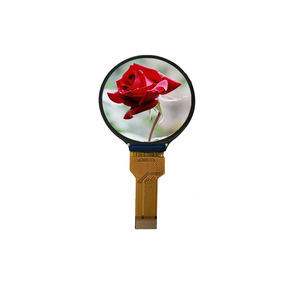
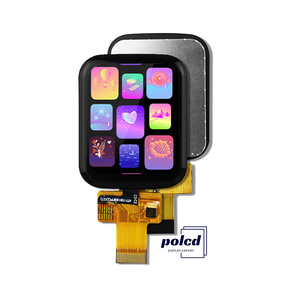
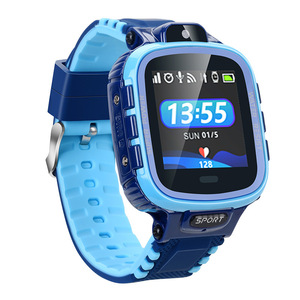
A comprehensive analysis of display backplane technologies, interface optimizations, and optical lamination for next-generation smart wearable devices.
Active Matrix OLED (AMOLED) provides self-emissive pixels, allowing pixel-level dimming, infinite contrast ratios, and significantly reduced power consumption during Always-On Display (AOD) modes. In contrast, IPS TFT LCDs utilize LED edge backlighting, offering superior thermal stability, higher peak brightness at lower costs, and complete immunity to static image burn-in.
Choosing the correct display bus interface balances microcontroller pin count, RAM requirements, and frame rate stability. Quad-SPI (QSPI) allows high-density graphic data transfer over 6 pins, achieving 60 FPS UI animation on ultra-low-power microcontrollers (MCU), whereas standard SPI is optimized for compact, low-bandwidth sub-displays.
Liquid Optical Clear Adhesive (LOCA) and Solid OCA full-lamination technologies eliminate the internal air gap between the touch sensor panel (TP) and the display glass. This process dramatically reduces optical refraction, improves contrast under direct ambient sunlight, and boosts mechanical impact resistance for IP68/IP69K ratings.
Compare display panel parameter matrix to select the ideal hardware configuration for your targeted market segment.
| Display Specification | 1.18" Round AMOLED | 1.69" IPS TFT LCD | 1.78" HD AMOLED | 1.65" On-Cell AMOLED |
|---|---|---|---|---|
| Display Technology | AMOLED | IPS TFT | AMOLED | On-Cell AMOLED |
| Active Resolution | 128 x 128 Dots | 240 x 280 Pixels | 368 x 448 HD | 348 x 442 Pixels |
| Bus Interface | SPI / I2C (SSD1327) | 4-Wire SPI / MCU | QSPI / SPI | High-Speed QSPI Bus |
| Luminance (Brightness) | 450 nits (Self-Emissive) | 500 - 800 nits | 600 nits Peak | 650 nits Peak |
| Touch Panel Type | Optional Add-on G+F | Capacitive Touch (G+F) | Full Lamination CTP | Integrated On-Cell Touch |
| Operating Temp Range | -20°C to +70°C | -20°C to +70°C | -30°C to +80°C | -20°C to +70°C |
| Target Application | Miniature Smart Rings/Wearables | Mass-Market Fitness Bands | Premium Health Smartwatches | Ultra-Slim Sleek Wearables |
Global procurement teams must adapt to evolving consumer expectations, stringent battery efficiency demands, and extreme environmental durability standards in modern smartwatch designs.
Low-Temperature Polycrystalline Oxide (LTPO) technology enables seamless dynamic switching between 1Hz for ambient AOD clocks and 60Hz/120Hz for fluid UI transitions, reducing display subsystem power draw by up to 35%.
Traditional discrete capacitive touch panels (G+F/G+FF) are rapidly giving way to embedded On-Cell and In-Cell touch sensors. This reduces module thickness by 0.4mm, boosts light transmittance above 92%, and streamlines supply chain assembly.
Outdoor sports and kids safety smartwatches demand ambient sunlight visibility. Advanced backlight micro-lens arrays (MLA) combined with anti-reflective AR coatings allow display panels to achieve over 1,200 nits without excessive thermal dissipation.
Expert Sourcing Tip: When sourcing screens for kids GPS smartwatches or rugged outdoor wearables, mandate 96-hour salt-spray resistance testing and full-lamination waterproof adhesive specs to prevent moisture ingress during daily water exposure (IP68 standards).
Combining world-class cleanroom automation with decade-long R&D experience in children's safety smartwatches, healthcare monitors, and industrial wearables.
Our state-of-the-art automated production facilities utilize dust-free Class 100/10,000 cleanrooms for COG (Chip-on-Glass), COF (Chip-on-Film), and automatic OCA lamination. This guarantees pristine optical clarity devoid of particulate contamination.
From initial FPC pinout design and customized backlight brightness to anti-reflective glass coatings and customized shape cutting (circular, square, oval, or non-standard cutouts), our engineering team executes quick-turn prototype iterations.
Every custom smartwatch screen undergoes 100% optical inspection (AOI), thermal shock testing (-40°C to +85°C), high-humidity aging (60°C/90% RH), and ESD protection screening to comply with CE, FCC, RoHS, and REACH directives.
For standard off-the-shelf display modules (e.g., 1.69" TFT or 1.78" AMOLED), our standard MOQ starts at 1,000 units. For fully customized cover glass shapes, custom FPC pinouts, or specialized backlight modifications, the baseline OEM production MOQ is typically 3,000 to 5,000 units per batch.
Yes. We offer cover glass thickness options ranging from 0.55mm to 1.1mm with chemically strengthened Gorilla Glass or Panda Glass substrates. Surface treatment options include Anti-Fingerprint (AF) oleophobic nano-coating, Anti-Reflective (AR) etching, and Anti-Glare (AG) surface texturing.
Absolutely. We supply comprehensive driver initialization C-code, register setup maps, and FPC pinout datasheets compatible with popular wearable microcontrollers including RT-Thread, FreeRTOS, ESP32, Nordic nRF52840, STM32, and Qualcomm wearable chips.
We utilize full optical lamination (OCA/LOCA) to seal the display matrix to the cover lens. Furthermore, we apply specialized hydrophobic perimeter foam gaskets or liquid silicone dispenser seals along the FPC connector tail to prevent water ingress up to 1.5m for 60 minutes.
Standard off-the-shelf evaluation samples ship within 3 to 5 business days. Custom FPC toolings or customized cover glass prototypes require approximately 15 to 20 calendar days for engineering sample (ES) validation prior to mass production tooling ramp-up.
Our display panel manufacturing facilities operate under ISO 9001:2015 Quality Management Systems and IATF 16949 automotive standards. All displays comply fully with European RoHS 2.0, REACH chemical directives, and CE/FCC electromagnetic compatibility specs.
Speak directly with our senior display optical engineers and OEM product specialists. Get instant technical datasheets, custom FPC drawings, and wholesale volume quotation within 24 hours.