Engineered for global brand importers, regional distributors, and enterprise buyers requiring custom OEM/ODM assembly, certified sensor modules, and tailored SDK support.
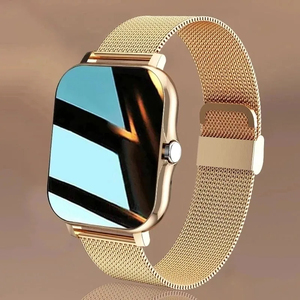 BLE 5.3 + Dual Calls
Designed for high-intensity fitness tracking with dynamic Bluetooth calling capabilities, targeted for custom branding and sports app compatibility.
Inquire Now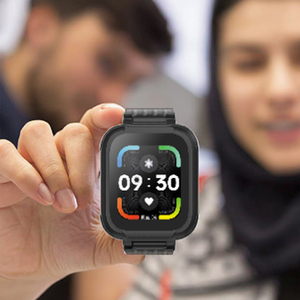 Integrated GPS & Compass
Features hardware-level compass modules and low-power GPS positioning, built specifically for outdoor adventure retail brands.
Inquire Now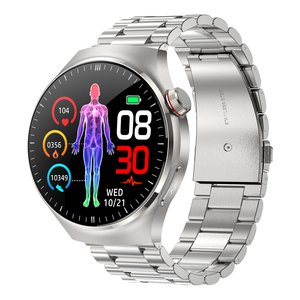 AMOLED + Medical ECG
Combines vivid AMOLED visuals with precision cardiac ECG diagnostics, making it an ideal candidate for healthcare and telehealth platforms.
Inquire Now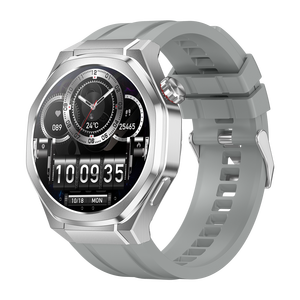 AI Voice + Music Storage
Equipped with HD noise-canceling microphones and local storage engine for hands-free calling and independent audio decoding.
Inquire Now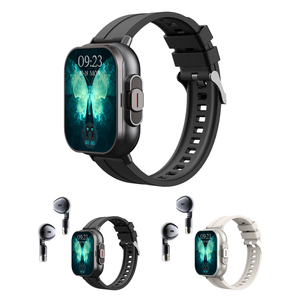 Hybrid 2-in-1 Wearable
Patent-pending internal storage charging compartment housing TWS Bluetooth earbuds, combining sound and health metrics in one device.
Inquire Now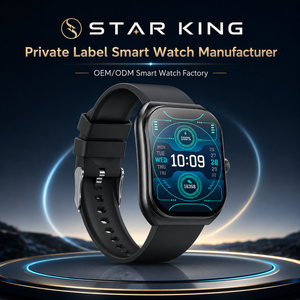 AMOLED + Oximetry
Optimized for high-contrast outdoor visibility with advanced optical pulse algorithms to track blood pressure trends and metabolic data.
Inquire Now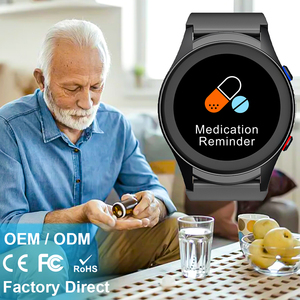 Senior Safety + GPS
Tailored for elderly monitoring and telemedicine apps, offering simplified navigation, continuous heart rate tracking, and emergency alert mechanisms.
Inquire Now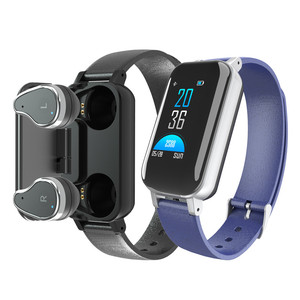 Compact Audio Wristband
A streamlined hybrid fitness band optimized for fast charging, active sleep stage recording, and instant wireless headphone deployment.
Inquire NowVertical integration across hardware engineering, surface-mount technology (SMT), automated firmware flashing, and ISO-certified cleanroom assembly lines.
Equipped with high-speed Yamaha and Fuji surface-mount technology lines capable of placing 0201 component packages, micro-BGA ICs, and ultra-fine pitch sensor stacks with 99.98% yields.
Every smartwatch model undergoes pressure chamber liquid submersion testing, ESD static suppression verification, drop simulation, and thermal shock cycles from -20°C to 70°C.
We provide full API documentation, iOS/Android SDK libraries, OTA server hosting customization, and UI skin tailoring so brands can build proprietary software ecosystems easily.
The global wearable device market has shifted from basic step-counting wristbands toward sophisticated, multi-sensor biometric nodes capable of remote patient monitoring, cellular independent communication, and localized machine learning algorithms. For procurement executives, brand managers, and hardware importers searching for leading Bluetooth smartwatch manufacturers and ODM factories, evaluating production partners requires moving beyond simple per-unit cost analysis. Real competitive edge lies in hardware stability, radio frequency (RF) tuning efficiency, battery safety compliance, and low-latency Bluetooth Low Energy (BLE) SoC architecture.
When sourcing custom smartwatches at scale, understanding the underlying System-on-Chip (SoC) framework determines the device's operational stability, power efficiency, and firmware customization limits:
The supply chain for wearable technology is undergoing structural changes driven by regulatory updates and consumer demands for privacy and long battery life. Leading factories are adapting to these key industry trends:
First, eSIM and Cellular Multi-Carrier Integration is rapidly displacing physical SIM slots, particularly in kids and senior safety wearables. Built-in eSIM modules remove mechanical openings, improving water resistance (IP68) while allowing remote over-the-air provisioning for global mobile operators.
Second, White-Label Application Security & Data Sovereignty has become mandatory for European and North American brand importers. Tier-1 factories now offer cloud SDKs that allow local storage of user biometric data on AWS or Azure servers within the importer's geographic jurisdiction, ensuring strict adherence to GDPR and HIPAA compliance mandates.
Below is a comparative matrix illustrating technical baseline expectations across entry-level, mid-tier, and premium OEM/ODM smartwatch platforms:
| Feature Category | Entry-Level OEM Tier | Mid-Tier Performance OEM | Premium Medical/Enterprise ODM |
|---|---|---|---|
| Main Processor | Jerry (JL) / Huntersun BLE 5.0 | Realtek RTL8763E / Actions BLE 5.3 | Nordic nRF5340 / Ambiq Apollo4 Plus |
| Display Tech | 1.44"–1.83" TFT LCD Panel | 1.69"–1.96" HD TFT / AMOLED | 1.43"–2.01" Ultra-HD AMOLED (600+ nits) |
| Sensor Array | Single Green LED Heart Rate | Dual-LED PPG (HR + SpO2) | Multi-Channel PPG + ECG + Skin Temp |
| Water Resistance | IP67 Daily Splash Proof | IP68 Certified (1.5m / 60 mins) | 5ATM / IP69K Professional Diving |
| Battery Capacity | 180 mAh – 230 mAh (3-5 Days) | 260 mAh – 350 mAh (7-12 Days) | 400 mAh – 700 mAh (14-30 Days Standby) |
| Customization Scope | Silk-screen Logo + Customized Packaging | Custom UI, Watch Faces, Casing Colors | Full Structural Tooling, SDK/API, Custom OTA |
Essential guidance covering Minimum Order Quantities (MOQ), white-label software customization, regulatory certifications, and factory quality control workflows.
For standard logo application and customized retail packaging using existing tooling, MOQs typically range between 500 and 1,000 units. For full OEM project customization—including custom plastic/metal injection molding, unique PCB layout revisions, or dedicated color anodizing—the initial baseline MOQ is generally 3,000 to 5,000 units per batch.
To ensure smooth customs clearance and market entry, smartwatch shipments must carry CE, RoHS, and REACH certifications for the European Union, and FCC ID compliance (specifically under Part 15 subparts C and E for Bluetooth and Wi-Fi emissions) for the United States. Additionally, devices with lithium-polymer batteries require UN38.3, MSDS, and Air/Sea Transport Safety Certificates.
Yes. Tier-1 OEM manufacturing partners provide full iOS (Objective-C/Swift) and Android (Java/Kotlin) SDK frameworks. These allow software development teams to parse raw Bluetooth data frames, pull continuous PPG heart rate streams, retrieve accelerometer step counts, and manage device pairing directly within their branded application environments.
Factories utilize dual-stage testing methods. First, dry vacuum differential pressure chambers test the unsealed PCBA housing on the SMT line to detect air leaks. Second, fully assembled smartwatches are subjected to automated water pressure chambers configured to 1.5 meters equivalent hydrostatic pressure for 60 minutes, ensuring every batch strictly satisfies IP68 ingress criteria.
Reliable smartwatch suppliers mandate strict Incoming Quality Control (IQC) on pure-cobalt lithium-polymer battery cells. Cells must pass 100% capacity grading, internal resistance sorting, and high-temperature aging chambers at 45°C with 85% humidity for 72 hours before assembly. All batteries feature built-in Seiko protection ICs against overcharging and short circuits.
Whether you require custom firmware, specialized biometric algorithms, or full-scale volume manufacturing, our engineering team is ready to discuss your specific technical requirements.
Inquire Now