An authoritative analysis of hardware design standards, network chipset integration, data security protocols, and OEM factory benchmarking for modern enterprise buyers.
The global market for children’s smart wearables, personal safety locators, and IoT tracking devices is undergoing a structural transition. As 2G and 3G cellular networks phase out worldwide, enterprise procurement teams, telecom operators, and brand owners must align with factories capable of delivering robust 4G LTE, eSIM integrated, and multi-constellation GNSS (GPS/GLONASS/BDS) hardware. Sourcing devices for children requires a dual engineering focus: strict physical durability paired with uncompromising cybersecurity and data privacy frameworks.
This industrial white paper evaluates the technical benchmarks necessary for selecting high-tier manufacturing partners. From Specific Absorption Rate (SAR) radio frequency safety and non-toxic TPU/silicone material compliance to turn-key parent application software stacks, our analysis provides procurement officers with the exact parameters required to establish long-term ODM/OEM manufacturing advantages.
Curated 4G LTE smartwatches, mini GPS locators, and concealed security hardware manufactured under strict ISO9001 and ISO14001 factory controls.
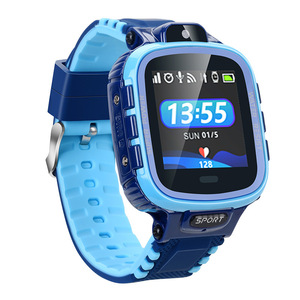
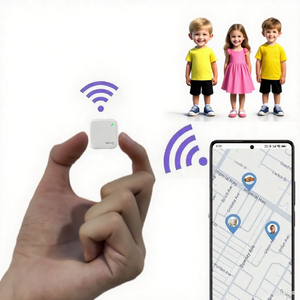
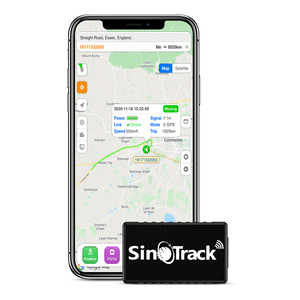
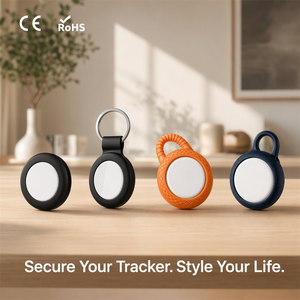
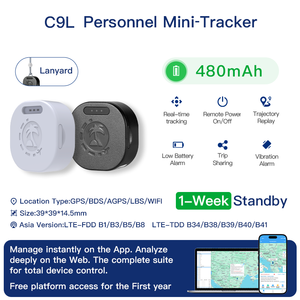
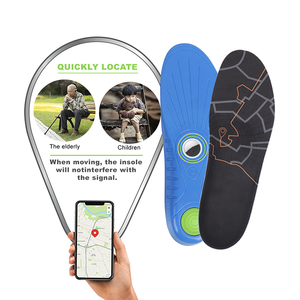
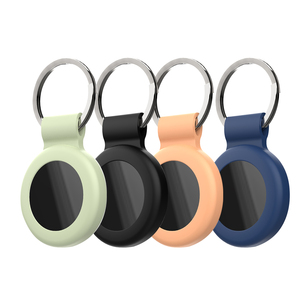
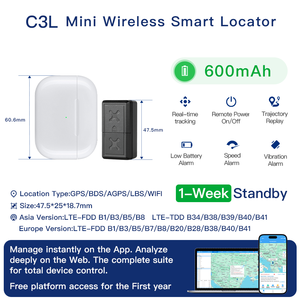
Why leading brands and global telecommunication carriers select our specialized production facilities for kids hardware projects.
Our manufacturing complex houses automated High-Speed SMT (Surface Mount Technology) lines, utilizing Siemens placement heads capable of micro-component positioning down to 0201 packages. Every PCB undergoes 3D Automated Optical Inspection (AOI) to eliminate solder voiding and micro-bridges.
Cellular connectivity for wearables demands precise antenna engineering. We utilize Laser Direct Structuring (LDS) antennas integrated into watch frames, validated inside fully anechoic testing chambers to ensure total isotropic sensitivity (TIS) and low Specific Absorption Rate (SAR) values under 1.6W/kg.
Children put hardware through extreme stress environments. Every IP68 batch is subjected to negative-pressure air-leak testing and 1.5-meter water bath pressure immersion chambers for 60 continuous minutes before final packaging, ensuring high durability against rain, handwashing, and accidental submersion.
Key technological shifts defining the next era of smart wearables and safety IoT hardware for children.
Physical SIM trays increase device volume and introduce water ingress points. Modern procurement mandates integrated eUICC (eSIM) chips, enabling over-the-air (OTA) carrier profile switching, lowering RMA rates caused by mechanical SIM failure, and offering global roaming capabilities out-of-the-box.
Single-frequency GPS struggles in dense urban canyons. Sourcing requirements now prioritize dual-frequency (L1+L5) GNSS combined with Wi-Fi BSSID mapping and cell-tower LBS fallback. Smart algorithms switch power states dynamically based on accelerometer input to prolong battery life.
Parents demand strict smartphone alternatives. B2B buyers require operating systems stripped of web browsers, open app stores, and unmonitored social feeds. Firmware must feature dedicated parental whitelisting, remote firewalling, and encrypted walkie-talkie channels (LTE PTT).
Wearables on children require strict thermal safety. Advancements in silicon-anode lithium-polymer batteries allow 700mAh capacities inside ultra-slim watch cases while maintaining surface temperatures under 38°C during active 4G video calling via NTC thermal throttling.
A comprehensive comparison of hardware standards across standard tier vs. enterprise OEM tier kids smart devices.
| Evaluation Parameter | Standard Market Entry Level | Enterprise Tier OEM/ODM Standard (Our Factory) | Procurement Advantage |
|---|---|---|---|
| Cellular Network | 2G / 3G GSM or basic 4G Band 1/3 | Full Band 4G LTE Global FDD/TDD + eSIM | Future Proof Worldwide roaming |
| Positioning Engine | GPS + LBS (Margin of error ~50m) | GPS (L1+L5) + GLONASS + Wi-Fi + LBS + SmartPin™ | High Precision Indoor & urban accuracy |
| Water Protection | IP65 Splash Proof | IP68 Certified (1.5m depth for 60 min) | Low RMA Swimming/Handwash durability |
| Processor & OS | Single-Core MCU / Basic RTOS | Quad-Core IoT SoC + Security Hardened Android OS | Smooth UX HD Video Call & OTA Updates |
| Battery Chemistry | Standard Cobalt 400mAh Cell | 700mAh High-Density Polymer + Thermal Cutoff NTC | Safety First Zero swelling, 135h standby |
| Data Privacy & Security | Unencrypted HTTP endpoints | AES-256 Encryption, COPPA & GDPR compliant cloud | Zero Liability Full legal data compliance |
Direct answers for procurement managers, brand managers, and B2B hardware importers.
For standard white-label hardware with custom brand packaging and logo silk-screening, our MOQ starts at 500 units. For full ODM customized tooling, plastic injection colors, and customized PCBA layouts, MOQ is typically 3,000 units per production cycle.
Yes. We offer complete White-Label Parent Applications (iOS & Android) with custom UI brand coloring, splash screens, logo assets, and custom domain server endpoints. We also provide full SDK and API documentation for integration into existing telecom platforms.
Our cloud infrastructure utilizes AES-256 end-to-end encryption for all audio, video, and location payloads. Data is processed through SOC2-certified AWS/Azure server nodes with zero data monetization. No unauthenticated third-party services can access child profiles.
All shipments include complete compliance documentation packages including FCC ID, CE-RED, RoHS, REACH material reports, UN38.3 lithium battery safety test reports, MSDS, and IP68 laboratory ingress test certificates required by customs worldwide.
Absolutely. Our RF hardware engineers build regional-specific modem configurations (North America B2/B4/B5/B12/B66/B71; Europe/Asia B1/B3/B7/B8/B20) as well as global eSIM configurations compatible with major network operators.
Standard white-label customization takes 2 to 3 weeks. Custom ODM projects requiring new cosmetic tooling, molds, structural testing, and RF calibration typically require 60 to 90 days from initial CAD freeze to mass assembly line rollout.
Connect directly with our senior OEM/ODM hardware engineering team to review technical specs, request factory inspection reports, or obtain comprehensive pricing tier catalogs.