Explore our top-tier manufacturing catalog featuring industrial-grade GPS locators, children's safety smartwatches, and covert personal safety wearables certified for global markets.
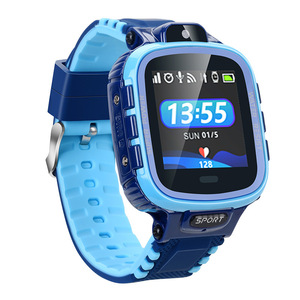
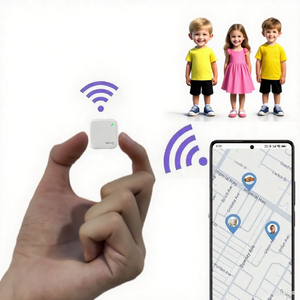
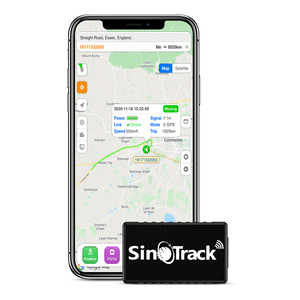
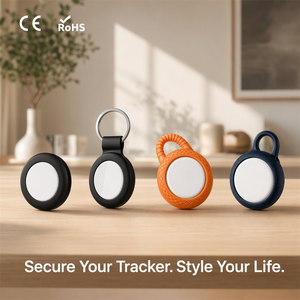
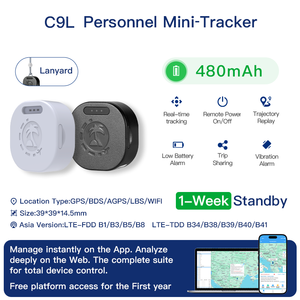
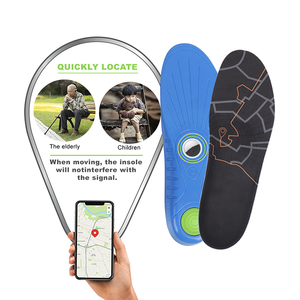
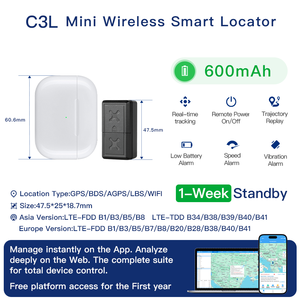
China's wearable electronics manufacturing ecosystem—centered in Shenzhen and Dongguan—offers unprecedented vertical integration, scaling speed, and cost efficiency for B2B brands, telcos, and government safety contracts.
From industrial mechanical tooling, PCB layout design, and RF antenna calibration (SignalBooster™ technology) to customized firmware packaging, top Chinese suppliers deliver complete turnkey engineering without relying on fragmented third-party vendors.
World-class facilities execute rigorous reliability testing protocols, including IP68 water submersion chamber testing (1.5m depth for 60 mins), thermal shock resistance (-20°C to +70°C), 10,000-cycle button actuation, and drop resistance tests.
Leading suppliers eliminate mechanical SIM tray failure points by embedding industrial eUICC (eSIM) chips directly onto motherboard assemblies, providing over-the-air (OTA) operator profiles across 160+ international wireless networks.
When evaluating Chinese safety wearable factories, buyers must look beyond headline unit prices. Superior suppliers distinguish themselves through RF Power Efficiency Calibration, Data Privacy & Cyber-Compliance (GDPR/COPPA standard encryption), and Parental Managed Mobile Application SDKs. A hardware unit is only as resilient as the firmware and server infrastructure supporting it.
As artificial intelligence, cellular networks, and sensor miniaturization converge, personal safety wearables are transitioning from passive location trackers to active, intelligent risk-mitigation systems.
Next-generation smartwatches and trackers incorporate edge-computing microcontrollers capable of real-time sensor fusion. By analyzing 6-axis accelerometer and gyroscope metrics locally, devices can distinguish between routine athletic motion and actual accidental falls, vehicular impacts, or sudden physical distress, initiating immediate SOS alerts without cloud latency.
Single-band GPS is rapidly being superseded by dual-frequency (L1+L5) GNSS chips capable of tracking GPS, GLONASS, Galileo, and BeiDou simultaneously. This technology reduces urban canyon multipath interference, allowing precise positioning accuracy down to sub-meter levels inside dense municipal structures or under dense foliage.
To eliminate dead zones for lone workers, outdoor adventurers, and vulnerable populations, advanced OEMs are integrating Direct-to-Cell satellite communication protocols (NTN - Non-Terrestrial Networks). When cellular 4G/5G signals decay, the wearable automatically falls back to low-Earth-orbit (LEO) satellite messaging for critical emergency signals.
Consumer fatigue with open internet access and ad-supported apps on children's smartwatches is driving massive adoption of zero-browser, zero-social-media wearable operating systems. Modern safety wearables isolate functions strictly to voice/video calling, approved contact white-listing, geofencing, and curated educational audio.
International distributors, telecommunications operators, and enterprise brands are adjusting their supply chain criteria. Here is how modern procurement teams are mitigating risk and maximizing ROI.
Enterprise buyers increasingly demand modular PCB architectures where housing colors, wristband materials (stretch-fit hypo-allergenic silicone, nylon), and outer casing branding can be customized rapidly without incurring heavy re-engineering costs or long tooling lead times.
Regulatory compliance is no longer optional. Top-tier Chinese suppliers now provide end-to-end data encryption (AES-256 at rest, TLS 1.3 in transit) and offer localized cloud hosting options (AWS US, EU-located datacenters) to comply fully with EU GDPR, US COPPA, and California CCPA guidelines.
Leading factories are adopting recycled post-consumer plastics (PCR) for device casings, eco-friendly soy-ink packaging, and cobalt-free lithium-battery chemistries to align with European and North American corporate sustainability mandates.
Essential technical and procurement insights for commercial buyers, brand managers, and logistics importers sourcing safety wearables from China.
Standard white-label products with custom logo printing usually start at an MOQ of 500 to 1,000 units. For full ODM projects requiring custom plastic injection tooling, specialized PCB fabrication, and bespoke retail box design, MOQs typically range from 3,000 to 5,000 units depending on hardware complexity.
Top China suppliers offer regional band variants (North America, Europe/Asia/Africa, Latin America) or multi-band global LTE Cat-1/Cat-M modules. These cover essential bands such as B1/B2/B3/B4/B5/B7/B8/B12/B13/B17/B20/B28/B66, ensuring seamless carrier onboarding across AT&T, T-Mobile, Vodafone, Orange, and regional MVNOs.
Waterproof wearables undergo automated air-pressure decay testing during assembly, followed by batch sampling in wet pressure chambers. IP67 units withstand temporary submersion up to 1 meter for 30 minutes, while IP68 units are tested to 1.5 meters for up to 60 minutes. Sonic-welding and high-precision rubber gasket sealing ensure long-term integrity.
Yes. Reputable manufacturers provide comprehensive communication protocols (TCP/UDP, HTTP, MQTT) and RESTful API/SDK documentation. This allows enterprise clients to integrate device telemetry directly into their proprietary emergency management, fleet tracking, or eldercare monitoring software.
For European markets, CE-RED (Radio Equipment Directive), RoHS, and REACH certifications are mandatory. For North America, FCC ID (Part 15/22/24/27), PTCRB carrier approval, and UL battery safety certifications (UL2054/UN38.3) are required. Top manufacturers provide complete laboratory test reports to streamline customs clearing.
Devices equipped with 700mAh lithium-polymer batteries typically deliver up to 135 hours of standby time. In real-world operational testing—including 10–20 active location ping checks, short voice calls, and basic telemetry—battery endurance averages 48 hours per charge cycle under optimized power-management firmware.
Whether you require custom firmware development, specialized hardware housing, or volume B2B manufacturing pricing, our engineering team is ready to accelerate your product timeline.