Engineered for Japanese market deployment with custom firmware, TELEC radio frequency compliance, and OEM/ODM private labeling options.
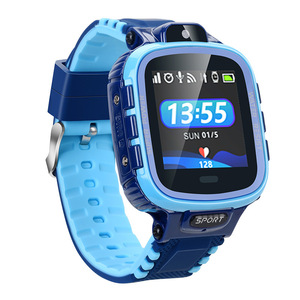
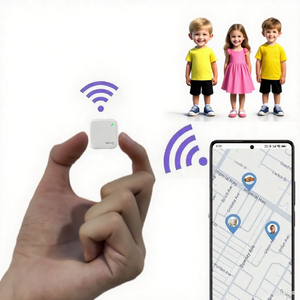
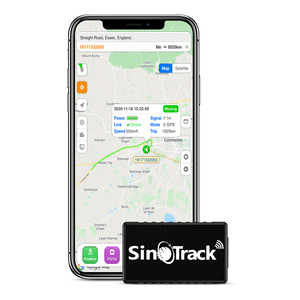
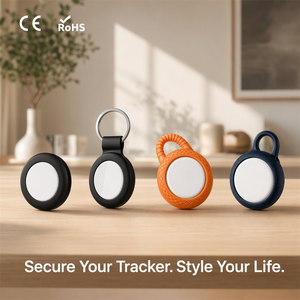
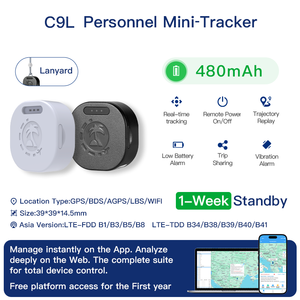
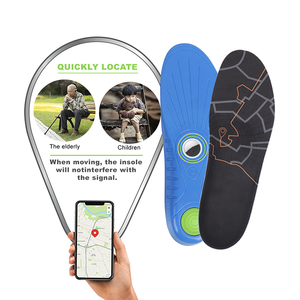
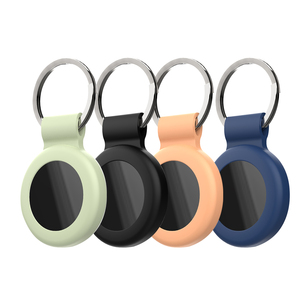
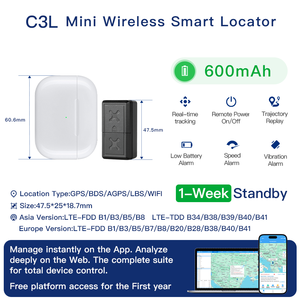
An engineering and supply chain analysis of how leading Chinese Original Equipment Manufacturers (OEM) and Original Design Manufacturers (ODM) supply high-precision smart bands, telemetry wearables, and health trackers to Japanese brand owners, enterprise integrators, and healthcare institutions.
Of smart bands and IoT tracking wearables distributed in Japan originate from specialized OEM facilities in Shenzhen and Dongguan.
Rigorous Japanese AQL quality standards met by top-tier Chinese SMT lines and vacuum enclosure assembly facilities.
Complete compliance certification support for Radio Law (電波法) and Electrical Appliance Safety (電気用品安全法).
Advanced biometrics including continuous heart rate, SpO2, skin thermal drift, and 6-axis motion tracking.
Japan’s demand for smart wristwear, telemetry bands, and dedicated personal trackers has undergone a fundamental structural transition. Moving beyond conventional consumer fitness tracking, the Japanese commercial market—spanning elderly care facilities (Kaigo), elementary school safety networks, corporate health management initiatives (Kenko Keiei), and heavy construction work sites—requires highly customized, power-efficient, and secure IoT wearable devices. To meet these stringent performance requirements at competitive scale, Japanese importers, OEM distributors, and solution providers rely heavily on tier-one Chinese smartwatch and smart band factories.
Sourcing smart bands for Japan requires more than hardware purchasing. Successful deployment hinges on three key criteria: 1) Technical Conformity Certification (TELEC / MIC Mark) for Japanese 4G LTE/IoT radio frequency bands (B1/B3/B8/B18/B19/B26); 2) PSE Certification for internal lithium-polymer batteries under Japanese safety law; and 3) Cloud API / AWS Tokyo Localized Server Integration to satisfy Japan’s Act on the Protection of Personal Information (APPI).
As a leading Chinese smart band manufacturer with over a decade of embedded IoT engineering expertise, our factory infrastructure combines automated Surface-Mount Technology (SMT), cleanroom optical bonding, ultrasonic waterproof sealing, and ISO 13485 medical-quality control workflows. We provide end-to-end white-label and ODM solutions engineered specifically to address the demanding specifications of the Japanese market.
How Chinese smart band factories combine advanced hardware integration, component sourcing, and rigorous quality assurance to dominate the global IoT supply chain.
Utilizing top-tier low-power chipsets from Realtek, Nordic Semiconductor, and MediaTek to achieve extended battery standby times (up to 135 hours for Cat-1 LTE and 12 months for BLE smart tags) while maintaining continuous cellular and GPS connectivity.
Integrated green/red/IR optical pulse reflection sensors with proprietary anti-motion artifact algorithms. Delivers precise real-time heart rate monitoring, SpO2 blood oxygen saturation measurement, and heart rate variability (HRV) stress tracking.
Constructed with high-precision double-injection molded TPU/silicone, liquid silicone rubber (LSR) gaskets, and ultrasonic welding. Every production batch undergoes 100% air-pressure and water-submersion testing down to 1.5 meters for 60 minutes.
Targeted hardware solutions customized for Japan’s societal challenges, industrial safety standards, and commercial enterprise ecosystems.
Japan leads the world in age demographic shifts, with over 29% of its population aged 65 or older. Wandering (徘徊 - Haikai) among dementia patients presents a critical challenge for care facilities and family caregivers in Tokyo, Osaka, and regional prefectures.
Japanese elementary school children routinely walk to school independently. Parents and local municipal councils require secure, distraction-free communication devices that eliminate open internet and mobile gaming risks.
Japanese construction companies and industrial conglomerates operate under strict Ministry of Health, Labour and Welfare guidelines regarding summer heatstroke risks (熱中症) at outdoor work sites.
Under Japan's "Kenko Keiei" (Health and Productivity Management) framework, Japanese corporations receive tax incentives and reduced health insurance premiums by actively monitoring employee health indicators.
Strategic analysis of regulatory, architectural, and technological shifts governing hardware procurement in Japan.
| Technology Vector | Legacy Market Standard | Next-Generation OEM Requirement in Japan | Factory Implementation Status |
|---|---|---|---|
| Cellular Architecture | Legacy 3G / 4G Cat-4 (High Power) | 4G Cat-1 bis & eSIM Integration (Low power, zero SIM card tray) | Fully integrated across all 2025 tracker lines. |
| Japanese Network Bands | Global roaming band subset | Docomo (B19/B21), SoftBank (B8), KDDI (B18) band lock | Custom RF tuning for maximum signal coverage in Japan. |
| Batteries & Charging | Standard micro-USB / Uncertified Li-ion | PSE-Certified High-Density Lithium + Magnetic Docking | 100% PSE compliance testing with localized documentation. |
| Positioning Telemetry | GPS + LBS Single Mode | Dual-Band GNSS + Wi-Fi MAC Sniffing + LBS | Sub-3 meter location precision in dense Tokyo high-rise environments. |
| App Ecosystem | Generic Chinese translation apps | Native Japanese UI/UX + LINE Messaging API integration | Custom firmware development with native Japanese QA teams. |
A primary driver for Japanese B2B procurement teams selecting Chinese manufacturing partners is the rapid adoption of eSIM technology and 4G LTE Cat-1 bis modules. Cat-1 bis offers low power consumption comparable to NB-IoT, but delivers the higher bandwidth necessary for two-way voice communication, instant SOS alerts, and OTA (Over-The-Air) firmware updates. By eliminating mechanical SIM card trays, our factory-built devices achieve superior structural integrity and true IP68 water resistance while lowering total assembly costs for Japanese importers.
Clear, authoritative answers addressing regulatory certification, OEM customization, factory MOQs, and logistics to Japan.
To legally distribute cellular or Bluetooth smart bands in Japan, products must hold the MIC Technical Conformity Mark (gikomaaku - 技適マーク / TELEC) verifying compliance with Japan’s Radio Law (電波法). Furthermore, internal rechargeable lithium-ion batteries with an energy density exceeding 400 Wh/L must pass PSE Certification (電気用品安全法). Our factory handles full sample preparation, lab testing, and paperwork submission to accredited test houses (such as TÜV or TELEC) on behalf of our Japanese OEM partners.
Yes. We provide full software engineering services including native Japanese translation of companion smartphone applications (iOS & Android), custom watch UI face designs using Japanese typography, and integration with popular messaging platforms like LINE for receiving automated geofence and emergency alerts. We also provide open API/SDK documentation for enterprise customers hosting their app infrastructure on AWS Tokyo or Osaka servers.
Our standard MOQ for neutral wholesale orders is 100 units. For custom laser-engraved logos and customized Japanese retail packaging, MOQ starts at 500 units. For full OEM hardware customization (custom housing colors, specialized sensor integration, or dedicated firmware flashing), our factory MOQ is typically 1,000 to 3,000 units depending on component complexity.
Metropolitan areas such as Tokyo and Osaka feature high urban density that can obstruct standard satellite signals. Our wearables utilize a hybrid multi-modal positioning engine combining GNSS (GPS, GLONASS, BeiDou, Galileo), Wi-Fi MAC address sniffing, and LBS cell tower triangulation. When GPS signals are degraded by skyscrapers, the device instantly switches to local Wi-Fi router identification to maintain indoor positioning accuracy down to 3–10 meters.
We offer complete flexible Incoterms including EXW, FOB (Shenzhen/Hong Kong), CIF, and DDP (Delivered Duty Paid). Under DDP terms to Japan, our logistics team manages export clearance in China, air/sea freight, Japanese consumption tax (JCT) processing, and customs clearance directly into your warehouse in Tokyo, Osaka, Nagoya, or Yokohama with zero administrative burden on your team.
How our manufacturing lines adhere to zero-defect quality management principles tailored to Japanese buyer expectations.
Japanese retail and enterprise markets maintain zero tolerance for product returns or hardware malfunctions. To satisfy these expectations, our manufacturing facility operates under strict ISO 9001 and ISO 13485 (Medical Device) quality management protocols. Every production run undergoes rigorous testing procedures across all assembly phases:
Automated Optical Inspection (AOI) screens 100% of printed circuit board assemblies (PCBA) for solder joint micro-defects prior to encapsulation.
Fully assembled smart bands are placed in high-temperature aging chambers under constant charge/discharge cycles to eliminate early component failures.
Unlike factories using random sampling, every single IP68 waterproof tracker is tested in dual-chamber vacuum leak detectors before final packaging.
We welcome third-party pre-shipment inspection teams (SGS, TÜV, V-Trust, or client-appointed Japanese QC auditors) at our factory. Our shipments consistently achieve an AQL score of Critical: 0, Major: <0.4, Minor: <1.0, ensuring flawless distribution across Japanese retail networks and corporate deployments.