
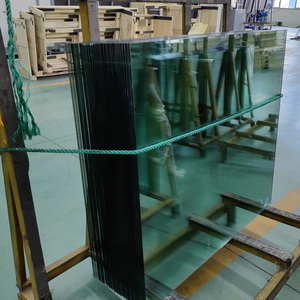
Engineered in state-of-the-art Chinese tempering facilities and customized for North American commercial & residential structural specifications.
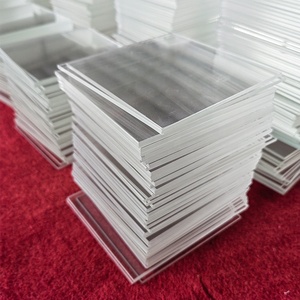
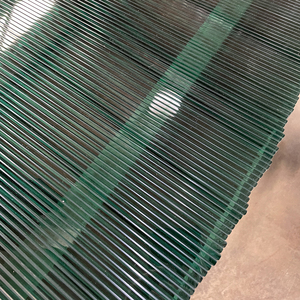
The New York City metropolitan area—comprising Manhattan commercial high-rises, Brooklyn mid-rise developments, Long Island residential luxury projects, and Queens industrial hubs—presents one of the most rigorous regulatory and structural environments for architectural glass in the world. Real estate developers, facade engineers, glaze contractors, and architectural procurement managers operating within New York are subject to stringent building codes enforced by the New York City Department of Buildings (NYC DOB), alongside standards set by ASTM International and the Safety Glazing Certification Council (SGCC).
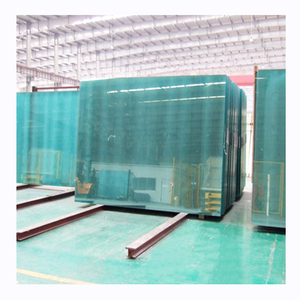
As leading China-based tempered glass manufacturers and factory export hubs, Chinese glass processing facilities have evolved to deliver world-class fabrication quality that meets or exceeds North American standards. Utilizing advanced forced-convection tempering furnaces (such as Glaston and NorthGlass), automated CNC edge polishing lines, and dedicated Heat Soak Testing (HST) chambers, tier-1 Chinese manufacturers provide NYC buyers with an unmatched balance of structural integrity, optical clarity, and cost efficiency.
To successfully pass NYC DOB plan reviews and site inspections, tempered glass imported into the State of New York must comply strictly with localized structural and safety benchmarks. Failure to meet these criteria can lead to project delays, failed site approvals, or catastrophic structural failures under East Coast weather stresses (including hurricane-force Atlantic wind loads and freezing winter thermal shock).
| Standard Specification | Regulatory Authority | Key Engineering Criteria | Application Area in NYC |
|---|---|---|---|
| ASTM C1048 (Kind FT) | ASTM International | Surface compression ≥ 10,000 psi (69 MPa); edge compression ≥ 9,700 psi. 4x mechanical strength vs. annealed float. | Curtain walls, exterior window walls, overhead glazing & structural facades. |
| ANSI Z97.1-2015 Class A | American National Standards | 400 ft-lb impact resistance test. Must break into small, harmless granular particles (dice) under impact. | Doors, side-lites, shower enclosures, storefronts & high-traffic public corridors. |
| CPSC 16 CFR 1201 Cat II | US Consumer Product Safety | Mandatory federal impact standard for safety glazing in hazardous locations (glazing areas > 9 sq ft). | Full-height office glass doors, floor-to-ceiling partitions, public venue entryways. |
| EN 14179 / ASTM C1422 | European & US Standards | Heat Soak Testing (HST): Heating tempered glass to 290°C to induce phase change of Nickel Sulfide (NiS) inclusions. | High-rise curtain walls (Manhattan skyscrapers) to eliminate spontaneous explosion risks. |
| NYC Local Law 97 | NYC Climate Mobilization Act | Limits carbon emissions per sq ft; mandates energy-efficient Insulated Glass Units (IGUs) with Low-E coatings. | New residential/commercial skyscraper construction and deep energy retrofits across NYC. |
Our manufacturing facility operates under audited Quality Management Systems (ISO 9001:2015) and maintains valid SGCC (Safety Glazing Certification Council) licenses, ensuring every panel shipped to New York ports (Port of NY & NJ / Elizabeth Marine Terminal) carries mandatory laser-etched compliance bugs visible on finished installations.
Architectural applications in New York vary significantly depending on the borough, building typology, and acoustic or thermal demands. Below are the primary architectural applications where Chinese precision-tempered glass delivers high value:
Midtown and Financial District office towers demand large-format, low-iron tempered glass sheets (up to 15mm or 19mm thickness) assembled into double or triple-glazed Insulated Glass Units (IGUs). Combining double-silver or triple-silver Low-E coatings with toughened structural glass delivers thermal U-values below 0.20, directly contributing to NYC Local Law 97 carbon reduction targets.
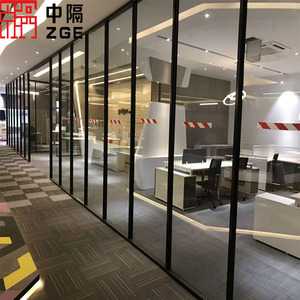
Modern corporate interiors in Wall Street and Hudson Yards feature frameless glass partition walls using 10mm to 12mm clear or low-iron float tempered glass with fine polished edges. These panels achieve STC (Sound Transmission Class) ratings up to 38-42 dB when laminated or paired in double-wall configurations, granting complete visual openness without sacrificing acoustic confidentiality.
Retail flagships in SoHo and luxury residential penthouses in Brooklyn increasingly incorporate custom curved tempered glass (bent toughened glass). Using precision roller-bending furnace technology, China factories can achieve tight bending radiuses (R ≥ 1000mm) without optical distortion or wave anomalies, ideal for revolving doors, circular office partitions, and dramatic corner storefront facades.
Beyond building envelopes, New York’s commercial food equipment manufacturers, pharmaceutical facilities in Long Island, and restaurant boiler systems rely on specialized Tempered Borosilicate 3.3 Glass. Capable of enduring continuous operational temperatures up to 450°C and sudden thermal gradients of 300°C, borosilicate glass provides exceptional sight-window visibility and chemical resistance.
Choosing the correct glass substrate and heat-treatment process is critical for structural safety and cost optimization. The table below outlines the mechanical and thermal characteristics of our engineered glass products:
| Glass Type & Specification | Bending Strength (MPa) | Thermal Shock Resistance (ΔT) | Breakage Pattern | Primary NYC Application |
|---|---|---|---|---|
| Standard Clear Float Glass | 40 - 50 MPa | ~40°C | Sharp, long shards (Dangerous) | Sub-framing, interior picture frames, low-risk glazing. |
| Heat-Strengthened (HS) Glass | 70 - 80 MPa | ~100°C | Large fragments retained in frame | Spandrel glass, vision glass prone to high thermal load without safety requirements. |
| Fully Tempered (FT) Safety Glass | 120 - 200 MPa | ~200°C | Diced, small blunt granules | Windows, doors, balustrades, skylights, curtain walls (Mandatory Safety Glazing). |
| Ultra-Clear Low-Iron Tempered | 120 - 200 MPa | ~200°C | Diced granules (VLT > 91%) | Luxury storefronts, museum displays, high-end Manhattan penthouse balustrades. |
| Tempered Borosilicate 3.3 | 150 - 220 MPa | > 300°C (Max 450°C continuous) | Granular micro-fragments | Industrial sight glass, commercial stove windows, high-heat laboratory equipment. |
Tempering glass alters its internal stress distribution permanently; once tempered, glass cannot be cut, drilled, or edge-worked without causing immediate fracture. Therefore, pre-tempering precision is the hallmark of a premier China factory. Our manufacturing facility leverages advanced European CNC machinery to deliver exact dimensional tolerances for New York engineering teams:
As NYC architectural specs evolve toward sustainable building envelopes and safer urban environments, China manufacturing partners are keeping pace with localized legislation and design movements:
Mandates bird-collision deterrent patterns on exterior glass below 75 feet. China factories supply ceramic frit patterns and UV-reflecting acid-etched tempered panels compliant with threat factor ratings ≤ 25.
Manhattan retail podiums favor uninterrupted sightlines. Advanced tempering lines now accommodate oversized single-sheet tempered glass up to 3300mm x 12000mm with integrated lamination.
Replacing single-pane windows in historic NYC brownstones and pre-war commercial structures with thin triple-glazed tempered IGUs featuring warm-edge spacer technology.
Comprehensive technical and logistical guidance for U.S. architects, facade contractors, and structural glass buyers.
Tier-1 China manufacturers maintain active certification with the Safety Glazing Certification Council (SGCC). Each production batch undergoes destructive punch impact tests, fragment density counts (ensuring >40 particles per 50x50mm area upon fracture), and optical distortion checks. Every glass panel is permanently laser-etched with SGCC certification numbers, ASTM C1048 specifications, and factory identifiers required for NYC Department of Buildings jobsite inspections.
Heat Soak Testing (per EN 14179 standard) accelerates the potential expansion of microscopic Nickel Sulfide (NiS) inclusions naturally present in raw float glass. By placing tempered glass inside a certified HST oven at 290°C for several hours, panels with NiS inclusions break inside the factory chamber rather than after installation on a skyscraper facade. For high-rise Manhattan projects, HST treatment eliminates spontaneous glass fallout hazards and reduces field replacement liability to near zero.
Typical factory production lead time for custom-cut, CNC-machined tempered glass ranges between 12 to 18 days. Direct ocean transit from major Chinese ports (Qingdao, Shanghai, Shenzhen) to the Port of NY & NJ (Maher Terminal or Elizabeth Marine Terminal) typically requires 28 to 35 days. For time-sensitive NYC construction schedules, experienced factories provide end-to-end DDP (Delivered Duty Paid) freight service directly to staging sites in Brooklyn, Queens, or New Jersey storage hubs.
Products are packed into heavy-duty, moisture-proof, fumigated solid wooden crates or steel-framed A-frames. High-grade plastic film, mildew-proof interlayers (powder or paper interleaved), and corner rubber protectors cushion each glass pane. Crates are reinforced with heavy steel strapping inside 20ft or 40ft Open-Top / High-Cube containers to withstand ocean pitch and roll dynamics without micro-cracking.
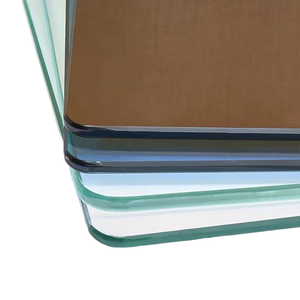
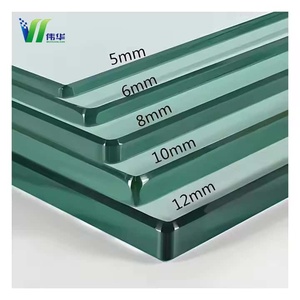
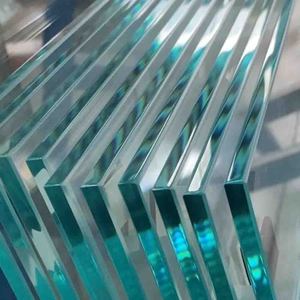
Standard clear float glass contains minor iron oxide levels that produce a visible greenish hue, especially noticeable along thick polished edges (10mm to 19mm). Low-Iron tempered glass (such as Starphire-equivalent glass) reduces iron content by over 85%, achieving a Light Transmittance (VLT) exceeding 91%. In NYC high-end retail storefronts, art galleries, and modern residential balustrades, low-iron tempered glass delivers true color rendering and pristine edge aesthetics.
Yes. Utilizing multi-axis Intermac and Bystronic CNC processing centers, factories can execute complex hinge cutouts, patch fittings, lock notches, and countersunk holes according to CAD/DXF drawings submitted by NYC project engineers. Additionally, ceramic digital printing (fritting) enables custom architectural patterns, gradient privacy screens, and bird-friendly glass designs baked permanently into the glass surface during tempering.
Direct Factory Wholesale Pricing | Full SGCC & ASTM Certification | Dedicated Engineering Support for New York & East Coast Construction Projects
Get a Quote